How To Fix Induction Pan Aluminum Core Warping?
Did your induction pan stop sitting flat on the cooktop? You are not alone.
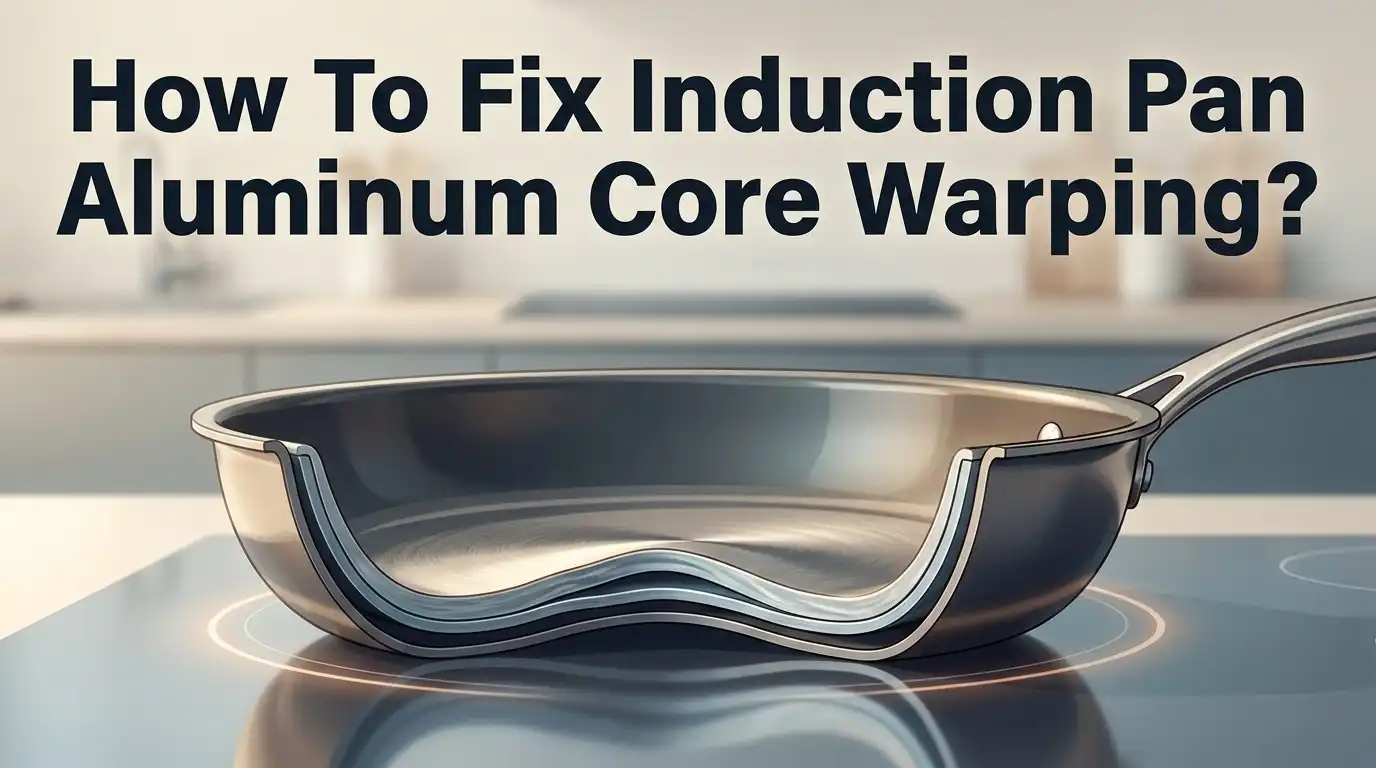
Warping is one of the most common problems induction pan owners face. That aluminum core inside your clad pan reacts fast to heat changes. This makes it prone to bending out of shape.
The good news? You can fix a warped pan bottom, at least for now. A rubber mallet and a little patience can flatten most warps.
But here’s the real secret. Prevention matters more than any fix. Once you understand why warping happens, you can stop it before it starts.
In a Nutshell
- Warping happens from heat shock, not from your induction cooktop itself. Fast heating and cooling stress the aluminum core until it bends.
- Rubber mallet fixes work, but only for a while. Gentle taps can flatten the bottom again, but the fix won’t last forever.
- Gradual heating stops future damage. Turn your cooktop up slowly instead of blasting it to high heat right away.
- Cooling matters just as much as heating. Let your pan rest on a trivet or cool burner before you wash it.
- Cold water is the enemy of hot pans. Never run tap water over a hot pan bottom. That sudden shock warps the core fast.
- Warped pans lose contact with your cooktop. This means uneven heating and poor performance until you fix the shape.
Why Aluminum Cores Warp on Induction Cooktops
Aluminum cores in clad pans are excellent heat conductors. They spread warmth evenly across the pan bottom. However, this same property makes them vulnerable to warping on induction cooktops.
Induction cooktops generate intense heat very quickly. The heating happens in seconds, not minutes. Your aluminum core expands rapidly when exposed to this sudden temperature spike.
Here’s what happens inside the metal. Different layers of your pan heat at different rates. The stainless steel exterior heats slower than the aluminum core beneath it. This uneven expansion creates stress between the layers.
The bottom of your pan bears the most stress. It sits directly on the induction surface. The heat concentrates there, causing the aluminum to expand more than the sides. Over time, this imbalance warps the flat bottom into a curved or domed shape.
Rapid cooling makes the problem worse. When you finish cooking and immediately run cold tap water over the hot pan, the bottom cools faster than the sides. The aluminum contracts unevenly. This thermal shock pushes the warping further.
Repeated heating and cooling cycles damage your pan permanently. Each time you heat too fast and cool too quick, you stress the aluminum core more. Eventually, the metal loses its ability to return to its original flat shape.
The warping gets worse each time you repeat this cycle. Your pan gradually becomes less and less flat. Soon it rocks on your cooktop instead of sitting flush against the surface.
Induction cooktops don’t cause this problem directly. Your heating and cooling habits do. The cooktop simply heats very efficiently. When you combine efficient heating with rapid cooling, you create the perfect conditions for aluminum core warping.
Understanding this process helps you prevent future damage. You now know exactly what causes the problem. This knowledge lets you change your cooking habits and protect your pans.
Signs Your Pan Bottom Has Warped
Your pan bottom tells a clear story. When warping starts, you will notice specific signs that mean action is needed now.
The most obvious sign is wobbling. Place your pan on a flat surface and watch it rock back and forth. A flat pan sits still. A warped pan rocks like a boat. This wobble means your pan no longer makes full contact with your induction cooktop.
You might see visible dents or bulges on the bottom. Run your hand across the surface. You will feel bumps or valleys. Some pans develop a dome shape in the center. Others cave inward. Both patterns signal warping has occurred.
Heat distribution becomes uneven when warping happens. Your food cooks unevenly in certain spots. You notice hot zones and cold zones in the same pan. This happens because warped bottoms don’t sit flush against the cooktop surface.
Your induction cooktop may start beeping or shutting off. Many induction cooktops have sensors that detect poor contact. When your pan wobbles, the cooktop loses connection. The unit responds by powering down or showing error messages.
Listen for unusual sounds during cooking. Warped pans sometimes rattle or vibrate more than normal. The pan moves slightly as heat builds up inside the metal.
Temperature changes become harder to control. Your pan may heat faster in some areas than others. Boiling water might only bubble in one section of your pan.
Check the pan edges too. Sometimes warping starts at the outer rim before affecting the entire bottom. Look for gaps between your pan and a flat counter surface.
These signs appear gradually or suddenly depending on how the warping happened. The sooner you spot them, the sooner you can take action to restore your pan’s performance and prevent further damage from developing.
Step-by-Step: Flattening a Warped Pan with a Rubber Mallet
A rubber mallet is your best tool for fixing a warped pan bottom. This method works because it applies controlled force to flatten the aluminum core without damaging the stainless steel exterior.
Start by placing your pan on a sturdy, flat work surface. A wooden cutting board or thick towel underneath protects your countertop. Make sure the pan is completely cool before you begin. Never attempt this on a hot pan.
Locate the warped area on the bottom of your pan. You’ll see it bulges outward or dips inward. Position your rubber mallet directly over this spot. The rubber head won’t scratch or dent your cookware like a metal hammer would.
Strike the warped area with gentle, controlled taps. Use light to medium force, not heavy swings. Start from the center of the warp and work outward toward the edges. Make multiple passes rather than one hard hit.
Check your progress frequently. Place the pan on a flat surface and see if it sits level now. You may need 20 to 30 taps depending on the severity of the warp.
Important: This fix is temporary only. The aluminum core will likely warp again if you repeat the same heating and cooling mistakes. This method buys you time, but it doesn’t solve the root cause.
After flattening, test your pan on your induction cooktop. It should make full contact with the surface now. The cooktop should stop beeping if it was doing that before.
Remember that each time you use this method, you’re working the metal. Eventually, repeated mallet strikes can weaken the pan’s structure. Prevention through gradual heating and cooling is always better than fixing warping after it happens.
Proper Heating Techniques to Prevent Future Warping
Proper heating techniques are your best defense against future warping. The key is to avoid sudden temperature changes that stress the aluminum core inside your clad pan.
Start by preheating your pan slowly. Place it on your induction cooktop and set the heat to medium or medium low. Give the pan two to three minutes to warm up gradually. This allows the metal layers to expand evenly without creating internal stress.
Never jump straight to high heat. Even though induction cooktops can reach high temperatures quickly, your pan cannot handle that shock. The stainless steel exterior and aluminum core heat at different rates, and rapid heating forces them apart internally.
Keep your heat setting moderate during cooking. Most foods cook perfectly well at medium heat on an induction cooktop. Higher settings generate unnecessary stress on the metal layers and increase warping risk significantly.
Allow your pan to cool naturally after you finish cooking. Do not rush this step. Place your hot pan on a trivet or on the cooktop surface itself and let it sit for several minutes before moving it.
Never expose a hot pan to cold water. This creates extreme thermal shock that can cause immediate warping or make existing warping worse. Wait until your pan cools completely before washing it.
If you need to cool your pan faster, move it to a cool area of your stovetop rather than running it under cold water. This slows the cooling process safely.
Establish a consistent routine with these techniques. Every time you use your pan, follow the same heating and cooling pattern. This consistency trains you to handle your cookware properly and prevents the repeated stress cycles that cause permanent damage.
These simple habits take almost no extra time but add years to your pan’s life.
Safe Cooling and Washing Practices
Safe cooling and washing practices protect your induction pan from further warping. These habits are simple but make a huge difference in your pan’s lifespan.
Let your pan cool naturally after cooking. Remove it from heat and place it on a cool area of your stovetop or a heat safe surface. This gradual temperature drop prevents the aluminum core from experiencing shock. Rushing this step is one of the biggest mistakes people make.
Never run cold tap water over a hot pan. The sudden temperature change creates stress inside the aluminum core. This thermal shock is exactly what causes warping in the first place. If your pan is still hot, simply wait. Patience here saves your cookware.
When you do wash your pan, use warm water instead of cold. Let the pan reach room temperature first. Warm water cleans effectively without shocking the metal structure. Dry your pan immediately with a soft cloth to prevent water spots and mineral buildup.
Avoid placing hot pans directly on cold surfaces. A trivet or wooden board works perfectly. These materials act as insulators and slow the cooling process. Your kitchen counter or sink rim can be too cold and cause uneven cooling.
Store your pan in a dry location after washing. Moisture can settle between the layers of your clad pan and cause problems over time. Make sure it’s completely dry before putting it away.
Check your pan’s bottom regularly after washing. Look for any new wobbling or dents. Catching problems early means you can adjust your heating and cooling habits before more damage occurs.
These washing and cooling practices take almost no extra effort. They work together with proper heating techniques to keep your induction pan flat and functional for years. Consistency matters more than perfection here. Small daily habits create big results.
Common Mistakes That Cause Warping
Induction pans warp because of mistakes people make during heating and cooling. Understanding these errors helps you protect your cookware from damage.
Heating too quickly is the biggest culprit. When you place a cold pan on an induction cooktop and immediately turn the heat to high, the bottom heats faster than the sides. This uneven temperature creates stress in the aluminum core. The metal expands unevenly and buckles. Always start with low to medium heat and increase gradually over several minutes.
Rapid cooling damages pans just as much as fast heating. After cooking, many people immediately move their hot pan to a cold surface or run it under cold water. This sudden temperature drop causes the metal to contract too quickly. The aluminum core shrinks faster than the stainless steel layers, creating warping. Your pan needs time to cool naturally at room temperature.
Thermal shock happens when temperature changes too drastically. Placing a hot pan on a cold countertop or splashing cold water on it creates extreme stress. The outer layers cool quickly while the inner core stays warm, causing the metal to bend and warp permanently.
Excessive heat also causes problems. Induction cooktops can reach very high temperatures. Using maximum heat settings regularly pushes the aluminum core beyond its tolerance level. The metal loses its ability to return to its original shape.
Skipping the cooling period before washing is another common mistake. Many people wash their pans immediately after cooking. Even warm water can cause issues if the pan is still very hot. The combination of heat and moisture creates additional stress.
These mistakes compound over time. Each heating and cooling cycle that’s done incorrectly makes the warping worse. Your pan might seem fine after one mistake, but repeated errors cause permanent damage.
Troubleshooting Persistent Warping Issues
When your induction pan develops a warp, you need practical solutions. Persistent warping means your pan no longer sits flat on the cooktop surface. This causes uneven heat distribution and poor cooking results.
The rubber mallet method offers a temporary fix for minor warps. Place your pan upside down on a sturdy wooden surface. Gently tap the warped area with a rubber mallet using light, even strikes. Work gradually around the affected spot rather than striking one location repeatedly. This approach can restore temporary flatness, but it’s not a permanent solution.
Test your pan immediately after flattening. Place it on your induction cooktop and check if it makes full contact with the surface. If gaps remain, the warping is too severe for this method.
Understanding why the warping returns helps you prevent future issues. Each time you use the mallet technique, you’re reshaping the metal. The aluminum core inside your pan has a “memory” and wants to return to its warped state if the underlying cause continues.
The real fix involves changing how you use your pan. Warping happens because of thermal stress, not because induction cooktops are defective. Your heating and cooling habits determine whether warping stops or gets worse.
If warping persists after multiple mallet attempts, your pan may be beyond practical repair. The structural damage becomes too severe for simple fixes. At this point, the pan won’t maintain proper contact with your cooktop regardless of your efforts.
Focus your energy on prevention moving forward. Gradual heating, moderate temperatures, and slow cooling prevent new warping from developing. These habits cost you nothing but a few extra minutes per cooking session. Your pans will last significantly longer when you treat them gently.
Final Thoughts
Warped induction pans happen because of quick temperature changes. That’s the core lesson here.
Your pan’s aluminum core expands and contracts with heat. Sudden shifts stress this metal and cause warping over time.
The good news is that you have full control over this problem. Prevention beats repair every single time.
Heat your pan gradually instead of blasting it with high heat right away. Let it cool naturally before you wash it. Skip the cold water shock treatment completely.
These small changes protect your cookware for years to come. They cost you nothing extra except a little patience.
Remember that a warped pan won’t fix itself permanently. The rubber mallet trick helps in a pinch. But it’s not a real solution.
Think of mallet fixes as first aid, not surgery. They buy you time. They don’t solve the root cause.
Your induction cooktop isn’t the enemy here. It heats efficiently and safely when you use it correctly. The real issue is always how you handle temperature changes.
Build better habits around heating and cooling your pans. Move hot pans to cool surfaces. Wait for complete cooling before washing. Use warm water instead of cold.
These practices become automatic with time. You won’t even think about them after a few weeks.
A flat, undamaged pan performs better on induction surfaces. It heats evenly. It cooks food properly. It lasts longer too.
Your cookware investment deserves this small effort. Treat your pans well, and they’ll serve you well in return.
Start today with your next cooking session. Small changes now prevent bigger headaches later. Your pans will thank you with years of reliable performance.
Frequently Asked Questions
Can a warped induction pan be permanently fixed?
No, warped pans cannot be permanently fixed. The rubber mallet method flattens the bottom temporarily, but the warp returns with use. The real solution is prevention through proper heating and cooling habits. Once your pan warps, you’re managing the problem rather than solving it.
Will a warped pan still work on my induction cooktop?
Warped pans perform poorly on induction surfaces. The bottom won’t make full contact with the cooktop. This means uneven heating and reduced cooking performance. Your induction cooktop needs a flat surface to work effectively.
Why does my pan keep warping even after I flatten it?
The mallet fix addresses the symptom, not the cause. If you return to fast heating or rapid cooling, warping happens again. You must change your heating and cooling behavior. Gradual heat application and slow cooling prevent the aluminum core from expanding and contracting too quickly.
Does my induction cooktop cause the warping?
No. Your induction cooktop doesn’t cause warping. User error during heating and cooling does. Blasting your pan with high heat or plunging it into cold water creates thermal shock. The aluminum core expands too fast, then contracts too fast, leading to warping.
What temperature should I avoid to prevent warping?
Keep heat below 700°F on your induction cooktop. Excessive heat puts too much stress on the aluminum core. Start with medium or medium high heat instead. Your food cooks properly at lower temperatures, and your pan stays flat.

Hi, I’m Rue Hessel, the founder and voice behind TheGenTool. I’m a passionate tech enthusiast who loves exploring the latest gadgets, smart devices, and electronics that shape our everyday lives. Through my website, I share honest, hands-on reviews of trending Amazon products to help you make smarter and more confident buying decisions.