How To Fix Automatic Pan Stirrer Battery Compartment Rusting?
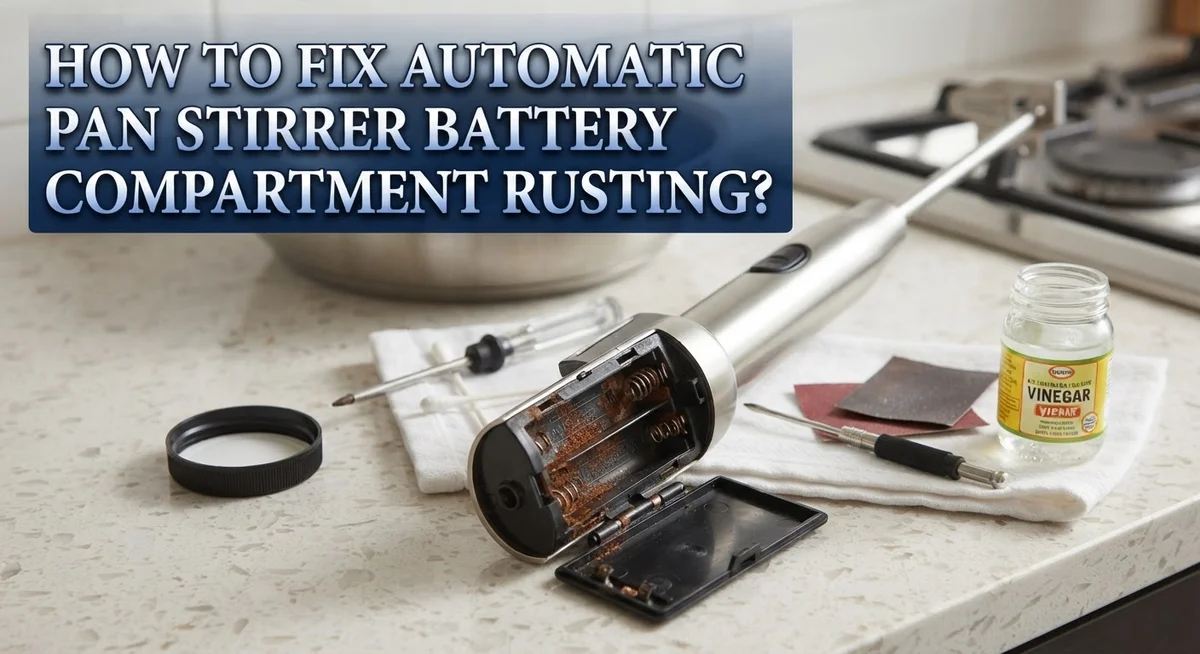
Does your automatic pan stirrer refuse to turn on? You open the battery compartment and see a crusty white or greenish buildup. That’s a common problem, and it’s fixable.
Here’s the good news. What looks like rust is usually battery acid corrosion. It happens when old batteries leak inside the compartment. This buildup can block power flow and stop your stirrer from working.
The bad news? If you ignore it, that corrosion can spread. It may damage the metal contacts or even harm the circuit board.
In a Nutshell
- It’s corrosion, not rust. Battery acid reacts with metal contacts. This creates a crusty buildup that blocks power flow.
- Remove batteries first. Always take out old batteries before you clean anything. This stops further leaking and keeps you safe.
- Baking soda is your best friend. Mix it with water to make a paste. This paste neutralizes the acid instantly.
- Scrub gently with a brass brush. Brass is soft enough to protect delicate contacts. It still removes tough buildup with ease.
- Vinegar works, but with limits. Use it only on metal contacts. Never let it near circuit boards, since it can cause malfunctions.
- Dry everything completely. Leftover moisture or salt residue can conduct electricity. This creates new problems down the road.
- Prevention saves future headaches. Remove batteries when the stirrer sits unused. Check the compartment often for early signs of buildup.
Rust or Corrosion? Understanding What’s Really Happening
When you open your automatic pan stirrer’s battery compartment and see crusty white or greenish buildup, you’re looking at battery acid corrosion, not true rust. This is an important distinction because it changes how you clean it.
Here’s what actually happens. Battery acid leaks from old batteries and reacts with the metal contacts inside the compartment. This chemical reaction creates conductive salts that sit on the metal surfaces. These salts damage your circuits and prevent electricity from flowing properly to the motor.
True rust occurs when iron oxidizes from exposure to oxygen and moisture over time. Battery compartments rarely develop actual rust because the main problem is the acid itself, not oxidation. The white or green powder you see is the corrosion product, not rust.
Why does this matter? Because corrosion requires different cleaning methods than rust would. You need to neutralize the acid residue, not just scrub away oxidized metal. This is why baking soda works so well. It’s a base that neutralizes acidic compounds and stops the chemical reaction.
The conductive salts left behind are particularly dangerous. If you leave them in place or don’t dry everything completely, they can cause electrical shorts. This is why thorough cleaning and complete drying are essential steps.
Understanding the difference between corrosion and rust helps you avoid common mistakes. Many people use vinegar on circuit boards thinking it will help, but weak acid mixed with conductive salts can actually cause more problems. Knowing you’re dealing with acid corrosion, not rust, means you’ll use the right cleaning approach from the start.
Signs Your Battery Compartment Needs Cleaning
Your automatic pan stirrer gives you clear warning signs before the battery compartment becomes a real problem. Learning to spot these signals early saves you time and money.
White or greenish crusty buildup is the most obvious sign. This corrosion appears directly on the battery terminals or inside the compartment walls. The color tells you battery acid has started reacting with the metal contacts.
A burning or chemical smell when you open the battery door is another red flag. This odor comes from active corrosion happening inside the compartment. Don’t ignore it. The smell means the corrosion process is still moving forward.
Your stirrer might power on and off randomly or fail to start at all. Corrosion blocks the electrical connection between batteries and the motor. The device loses power even though the batteries are new.
Difficulty inserting or removing batteries suggests corrosion buildup inside the compartment. The metal contacts become rough and sticky. You might feel resistance that wasn’t there before.
Look for battery leakage or residue on the batteries themselves. This white powder or crusty material transfers from old batteries to the compartment. It spreads corrosion to the surrounding metal surfaces.
Visible discoloration on metal contacts appears as dark spots, white patches, or greenish tints. The metal changes color when corrosion forms on the surface.
Check your stirrer regularly if you use it frequently. Open the battery compartment every month and inspect the terminals. Early detection means you can clean the compartment before serious damage occurs. This simple habit keeps your pan stirrer running smoothly for years.
What You’ll Need Before You Start
Before you start cleaning your automatic pan stirrer’s battery compartment, gather the right supplies. You need basic household items that work effectively without damaging delicate electrical contacts.
Baking soda and water form your primary cleaning solution. Mix them into a thick paste that clings to corroded areas without dripping. This combination neutralizes battery acid safely and works on most corrosion buildup.
A brass brush is essential for scrubbing. Brass is soft enough to protect metal contacts while still removing stubborn deposits. Avoid steel brushes because they can scratch or gouge the delicate surfaces inside the compartment.
Cotton swabs help you reach tight spaces and corners. Use them to apply your cleaning paste or to wipe away debris from hard to reach areas. They give you precision that larger brushes cannot provide.
Keep white vinegar or lemon juice on hand as an alternative. These acidic liquids work well on metal contacts but should never touch circuit boards. Have them ready if baking soda alone doesn’t remove all corrosion.
Paper towels or lint free cloths are necessary for drying. Leftover moisture or salt residue creates electrical hazards, so thorough drying matters greatly. Avoid cloth that leaves fibers behind in the compartment.
A small container for the baking soda paste keeps your workspace organized. This prevents spills and helps you control the amount you use.
Finally, have your old batteries ready to remove and discard. Never skip this step before cleaning. Battery removal protects you from electrical shock and prevents accidental damage to active circuits.
Step-by-Step Guide to Cleaning the Battery Compartment
Start by removing the old batteries from your automatic pan stirrer. Don’t put them back in. Battery acid corrosion spreads quickly, so removing the source stops the problem immediately.
Next, wipe out any loose debris inside the compartment. Use a dry paper towel or lint free cloth. Get into corners and crevices where white or greenish buildup collects. This step removes surface particles before you apply any cleaning solutions.
Now make your baking soda paste. Mix baking soda with water until you get a thick, spreadable consistency. Baking soda neutralizes battery acid effectively without damaging delicate contacts inside the compartment. Apply this paste directly to corroded areas. Let it sit for a few minutes so the baking soda can work on the corrosion.
Grab your brass brush and scrub gently. Brass is safe for delicate contacts because it won’t scratch or create new conductive paths. Work the paste into crusted spots and discolored areas. Scrub until the white or greenish buildup disappears. Don’t press too hard or you might damage internal components.
Use cotton swabs to reach tight spaces your brush can’t access. Dip swabs in your baking soda paste and work them around battery contacts and compartment edges. Pay special attention to corners where corrosion hides.
Finally, wipe everything clean with a dry cloth. Remove all baking soda residue completely. Any salt residue left behind creates a conductive hazard that damages your stirrer’s circuits. Keep wiping until the compartment looks completely dry and clean. Your battery compartment is now ready for fresh batteries.
Using Vinegar and Lemon Juice Safely on Contacts
Vinegar and lemon juice work well on battery contacts, but you need to use them carefully. These mild acids can dissolve some corrosion, yet they also leave behind salt residue that conducts electricity poorly.
Apply vinegar or lemon juice only to the metal contacts themselves. Dip a cotton swab into white vinegar or fresh lemon juice. Gently rub the corroded spots on the battery terminals and contact points inside your compartment.
The acid will fizz slightly as it breaks down the crusty buildup. This fizzing action shows the corrosion is dissolving. Keep working until the white or greenish deposits disappear from the metal surfaces.
After you finish scrubbing with vinegar or lemon juice, rinse the contacts thoroughly with clean water. Use a fresh cotton swab dampened with plain water to remove any remaining liquid. This step prevents salt from building up again and causing future problems.
Dry everything completely with a lint free cloth or paper towel. Any moisture left behind will cause new corrosion to form quickly.
Never apply vinegar or lemon juice to circuit boards or plastic components. These acids can damage the delicate electronics inside your stirrer. Stick to treating only the metal battery contacts and terminals.
If corrosion is heavy, baking soda paste works better than vinegar for your first cleaning attempt. You can use vinegar afterward as a secondary treatment on stubborn spots.
Let your battery compartment air dry for at least 30 minutes before inserting fresh batteries. This waiting period ensures no moisture remains inside. Your automatic pan stirrer will work reliably once everything is completely dry and clean.
Mistakes to Avoid When Cleaning Corrosion
When cleaning corrosion from your automatic pan stirrer’s battery compartment, several mistakes can make things worse. Understanding what to avoid protects your device and ensures successful cleaning.
Don’t use vinegar on circuit boards or plastic components. While vinegar works great on metal contacts, it’s acidic and can damage delicate electronics. The acid reacts with conductive salts left behind by battery corrosion. This combination may cause short circuits or permanent malfunction. Stick to vinegar only on the metal contacts themselves, never on surrounding plastic or circuitry.
Leaving salt residue behind is a critical error. Battery corrosion creates conductive salts that remain after you clean. These salts attract moisture and cause future corrosion to restart quickly. Always rinse thoroughly with clean water after using any cleaning solution. Then dry everything completely with a lint free cloth.
Don’t skip removing old batteries before you start cleaning. Leaving batteries in place while you apply liquids risks additional damage. Battery acid can spread further into the compartment and damage more components.
Avoid scrubbing too aggressively with metal brushes. You might scratch delicate contact surfaces or loosen important connections. A brass brush is gentler than steel, but still requires a light touch. Let your cleaning solution do most of the work while you scrub gently.
Never mix cleaning methods or solutions together. Using baking soda paste followed immediately by vinegar creates unexpected chemical reactions. Clean with one method, rinse thoroughly, dry completely, then wait before trying another approach if needed.
These mistakes seem small, but they prevent your pan stirrer from working properly again. Patience and careful technique give you the best results.
Preventing Future Corrosion Buildup
Battery corrosion happens because old batteries leak acid. You stop future corrosion by preventing batteries from sitting too long inside your device. Replace batteries on a regular schedule before they have a chance to leak.
Check your automatic pan stirrer’s battery compartment every few months. Look for any white, blue, or green crusty buildup forming around the contacts. Catching corrosion early makes cleaning much easier and prevents damage to the internal circuits.
Remove batteries immediately when you’re not using the stirrer for extended periods. If you plan to store your device for weeks or months, take the batteries out completely. This single step eliminates the biggest cause of corrosion problems.
Keep your battery compartment dry at all times. Moisture speeds up the corrosion process significantly. After cleaning sessions, make sure everything is completely dry before inserting fresh batteries.
Use fresh, high quality batteries from reliable sources. Cheap or expired batteries fail more often and leak faster than quality options. Investing in better batteries protects your device from corrosion damage.
Store your automatic pan stirrer in a cool, dry location. Humidity and heat accelerate battery breakdown and acid leakage. A kitchen cabinet or drawer works better than a damp bathroom or humid garage.
Consider setting phone reminders to check your battery compartment quarterly. This habit keeps you aware of potential problems before serious corrosion develops. Many people forget about their stirrer until it stops working, but regular checks prevent expensive repairs.
When you do insert new batteries, handle them with clean, dry hands. Oils and moisture from your skin can contribute to corrosion over time. These simple prevention strategies keep your automatic pan stirrer working reliably for years.
Troubleshooting: When Cleaning Doesn’t Solve the Problem
When basic cleaning doesn’t eliminate the corrosion problem, you’re likely dealing with deeper battery acid damage. This happens when corrosion has eaten into the metal contacts or created stubborn crusty buildup that regular wiping won’t remove.
Start by examining the damage closely. Look for green or white crusty deposits that feel hard and stuck. If the corrosion has created a thick layer, you need a stronger approach than simple cleaning.
Use a baking soda paste as your first advanced solution. Mix baking soda with a small amount of water until you get a thick consistency. Apply this paste directly to the corroded areas and let it sit for several minutes. The baking soda neutralizes battery acid effectively without harming circuit boards.
After the paste sits, scrub gently with a brass brush. Brass is soft enough to clean delicate contacts without scratching them. Work in small circular motions and take your time. Rinse thoroughly with clean water when finished, then dry completely with a lint free cloth.
If corrosion persists after baking soda treatment, consider the eraser method. A pink Pearl eraser can remove light to moderate corrosion from metal contact points. Rub gently across the affected areas. This works well for surface level buildup that paste alone won’t eliminate.
Sometimes the compartment itself shows discoloration or pitting. This is permanent damage to the metal. While you can’t reverse it, cleaning the area prevents the corrosion from spreading further.
If the battery compartment still won’t function properly after these steps, the internal circuits may have sustained damage. At this point, the compartment likely needs professional inspection or replacement to restore full function to your automatic pan stirrer.
Final Thoughts
Fixing a corroded battery compartment is easier than it looks. Most cases involve battery acid corrosion, not actual rust. Once you know this, the right cleaning method becomes clear.
Start by removing the batteries. This step protects you from further exposure to leaking acid.
Next, wipe away loose debris with a dry cloth. This clears the surface before deeper cleaning begins.
A baking soda paste works well for most corrosion. Mix baking soda with water, apply it to affected spots, and let it sit briefly.
Scrub gently with a brass brush afterward. Brass is soft enough to protect delicate contacts while still lifting corrosion.
For lighter buildup, a cotton swab dipped in white vinegar or lemon juice can help. Use this only on metal contacts, never on circuit boards.
Avoid harsh scrubbing tools. Metal brushes other than brass can scratch contacts and cause more damage.
Always dry the compartment fully before inserting new batteries. Moisture left behind can restart the corrosion process.
Once cleaned, your automatic pan stirrer should work like new. Many units recover fully once corrosion is removed properly.
If corrosion returns often, check for storage issues. Humid environments speed up battery leakage and buildup.
Simple habits make a big difference. Removing batteries when not in use and checking the compartment regularly can prevent future problems.
Corrosion doesn’t have to mean the end of your stirrer. With the right cleaning steps, most units bounce back quickly.
Fixing this issue takes just a few minutes. With patience and the right tools, your pan stirrer can run smoothly again for a long time.
Frequently Asked Questions
Why does my battery compartment corrode instead of rust?
Battery compartments don’t actually rust. What you see is battery acid corrosion. When batteries get old, they leak acid inside the compartment. This acid reacts with metal contacts and creates crusty deposits.
These deposits are conductive salts. They can damage your stirrer’s circuits if left alone. This is why cleaning matters quickly.
Can I use vinegar to clean battery corrosion?
White vinegar works, but only on metal contacts. Never pour vinegar on circuit boards. The weak acid mixes with conductive salts and risks breaking your device.
Use vinegar only with a cotton swab. Dab it directly on corroded metal parts. Keep it away from electronic components inside the compartment.
What’s the safest way to remove corrosion buildup?
Baking soda paste is your safest option. Mix baking soda with a little water until thick. Apply it to corroded areas and let it sit for a few minutes.
Scrub gently with a brass brush. Brass won’t scratch delicate contacts like steel brushes do. Wipe everything dry before inserting new batteries.
How often should I check for corrosion?
Check your battery compartment every three months. Look inside for green or white crusty deposits. Remove batteries immediately if you won’t use your stirrer for weeks.
This simple habit stops corrosion before it damages circuits. Store your device in cool, dry places. Always use fresh batteries from reliable sources.
Will corrosion come back after I clean it?
Corrosion returns if old batteries leak again. Replace batteries regularly and remove them during long storage periods. Keep the compartment dry at all times.
These steps prevent acid from building up again. Your stirrer stays in working condition much longer.

Hi, I’m Rue Hessel, the founder and voice behind TheGenTool. I’m a passionate tech enthusiast who loves exploring the latest gadgets, smart devices, and electronics that shape our everyday lives. Through my website, I share honest, hands-on reviews of trending Amazon products to help you make smarter and more confident buying decisions.