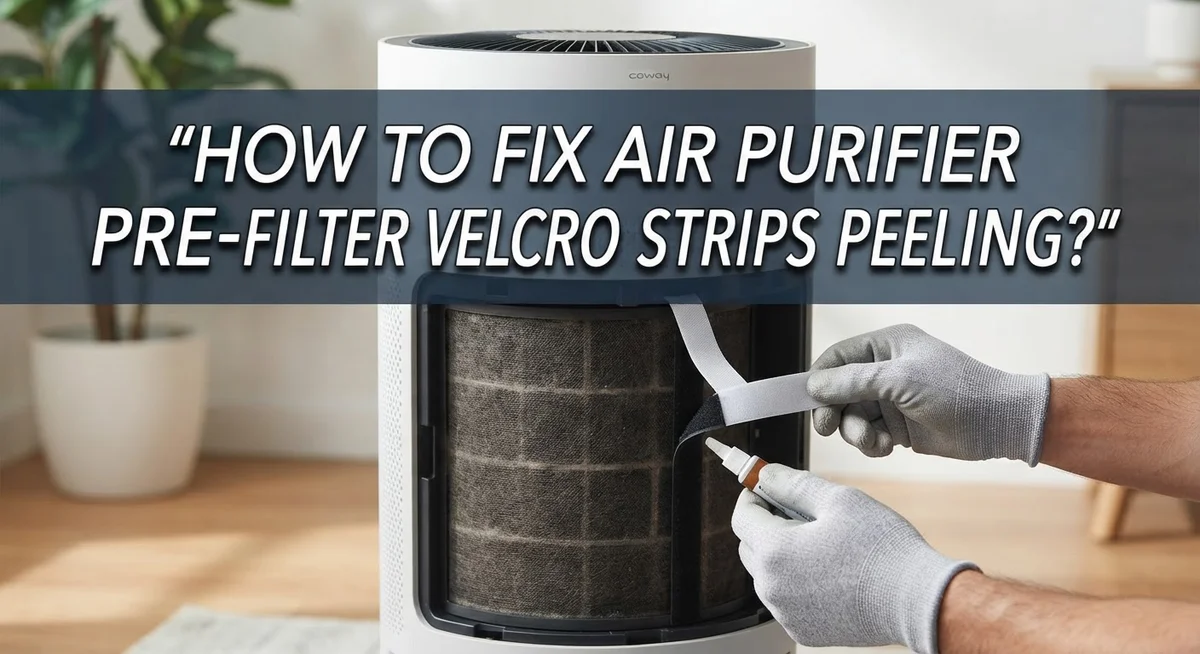
How To Fix Air Purifier Pre-Filter Velcro Strips Peeling?
Does your air purifier’s pre-filter feel loose lately? Peeling velcro strips are a common problem. They stop the pre-filter from sitting snug against the housing.
This issue affects many popular models, including units like the Honeywell HPA300. Over time, dust, moisture, and daily wear weaken the adhesive. The strips start lifting at the edges.
A loose pre-filter is more than just annoying. It can let unfiltered air sneak past, reducing your purifier’s efficiency. Your device works harder, but cleans less.
In a Nutshell
- Power off and unplug your air purifier before touching the pre-filter or velcro strips. Safety comes first.
- Peeling velcro usually happens from wear, moisture, or dust buildup. Regular care prevents most of these issues.
- Clean your pre-filter every 15 to 20 days. This simple habit reduces strain on the velcro strips.
- When replacing the front grille, align the tabs on the housing carefully. This keeps everything fitting snugly.
- Seal windows and doors in the room. Good sealing helps your purifier work efficiently and reduces filter strain.
- Don’t ignore your cleaning schedule. Skipping it causes filter buildup, which puts extra pressure on velcro strips.
- Think about your room size and ceiling height. Proper placement helps your purifier run smoothly without added stress.
- Fixing peeling velcro is mostly about prevention through maintenance. Stay consistent, and your pre-filter will stay secure for longer.
Why Pre-Filter Velcro Strips Peel Over Time
Velcro strips on air purifier pre-filters peel for several straightforward reasons. Understanding why this happens helps you prevent it in the future.
Wear and tear is the primary culprit. Every time you remove and reattach your pre-filter, the velcro loses a tiny bit of grip strength. After dozens of removals, the adhesive weakens significantly. The velcro simply cannot hold as firmly as it did when new.
Moisture exposure accelerates peeling dramatically. Air purifiers pull humidity from the air around them. This moisture settles on the velcro strips and breaks down the adhesive bond over time. Bathrooms and kitchens create extra moisture that speeds up this process.
Dust and debris also contribute to the problem. When dust accumulates on velcro surfaces, it creates a barrier between the strip and the filter. The adhesive cannot make proper contact, so it fails to grip effectively. A thin layer of dust may seem harmless, but it reduces velcro performance significantly.
Improper cleaning makes peeling worse. If you wipe the velcro roughly or use water directly on it, you damage the adhesive structure. Aggressive scrubbing removes the tiny hooks that make velcro stick.
Temperature changes can weaken adhesive bonds. Air purifiers in rooms with fluctuating temperatures experience repeated expansion and contraction. This movement stresses the velcro strips until they separate from the housing.
Filter weight also matters. Heavier pre-filters put more stress on velcro strips. Over time, this constant pressure causes the adhesive to give way. Regular cleaning keeps your pre-filter lighter and reduces strain on the strips.
Tools and Preparation Needed Before You Start
Before you start fixing peeling velcro strips on your air purifier pre-filter, gather a few basic items. You won’t need anything fancy or expensive for this task.
First, safety comes first. Power off your air purifier completely. Unplug it from the wall outlet. This step protects you and prevents accidental damage to the unit during work.
Next, collect cleaning supplies. You’ll need a soft dry cloth or microfiber towel. A small brush works well for removing dust and debris from the filter surface. Have a vacuum cleaner nearby if you prefer extra cleaning power.
For the actual repair, prepare a flat work surface. A table or countertop gives you plenty of room to lay out the pre-filter and velcro strips. Good lighting helps you see exactly where the strips are peeling.
Grab replacement velcro strips if you have them on hand. You don’t need to buy anything specific. Standard adhesive-backed velcro strips work perfectly. Keep both the hook side and loop side available.
Have a small container ready for tiny screws or parts if your model requires opening the grille. This prevents losing important pieces.
Consider having paper towels available for cleaning. You may need to wipe away dust, old adhesive residue, or moisture from the filter edges.
Finally, check your air purifier manual nearby. It shows exactly how your specific model comes apart. Different units have slightly different designs and assembly methods.
With these basic items gathered, you’re ready to begin the repair process. Most people already have these supplies at home. The whole setup takes just five minutes to prepare.
Step-by-Step: Removing the Old Velcro Strip
Start by powering off your air purifier completely. Unplug it from the wall outlet to ensure your safety. Wait a few minutes before touching any parts.
Locate the pre-filter where the velcro strips are attached. Most air purifiers have the pre-filter on the front or side. Check your manual if you’re unsure about the exact location.
Gently pull the pre-filter away from the purifier housing. Move slowly and steadily to avoid damaging the filter itself. The velcro should release with light pressure.
Examine the old velcro strips still stuck to the housing. You’ll see the hook side (rough texture) or loop side (soft texture) remaining on the plastic surface. Both types may still be present.
Use your fingernail or a plastic scraper to lift the edge of the velcro strip. Start at one corner and work your way across slowly. Don’t rush this step, as you want to avoid scratching the housing.
If the velcro resists, apply gentle heat using a hair dryer on low setting. Hold it about six inches away for 30 to 45 seconds. The warmth softens the adhesive and makes removal easier.
Peel away the velcro strip completely. Roll it into a ball as you go to minimize mess. Repeat this process for all velcro strips on the housing.
Clean the surface where the velcro was attached. Use a dry cloth to wipe away any remaining adhesive residue or dust. A slightly damp cloth works too, but dry the area immediately afterward.
Inspect the housing for damage. If the plastic surface looks intact and clean, you’re ready for the next step. The surface should feel smooth and free of sticky spots.
Step-by-Step: Attaching and Securing New Velcro Strips
Start with a clean, dry surface on your air purifier housing. Any dust or residue left behind will prevent new velcro from sticking properly. Wipe the area with a dry cloth to remove all particles and debris.
Measure your pre-filter carefully before applying new velcro strips. You want the strips to align exactly where the old ones were positioned. This ensures your filter attaches securely without gaps or misalignment.
Cut your velcro strips to the correct length. Most pre-filters need strips along the sides or top edges. Make sure each piece matches the original placement pattern. Precision here prevents future peeling problems.
Apply the hook side of the velcro first. This is the rough, scratchy side. Press it firmly onto the air purifier housing. Hold pressure for at least 30 seconds to create a strong bond. Don’t rush this step.
Next, attach the loop side to your pre-filter itself. The loop side is the soft, fuzzy part. Again, press firmly and hold for 30 seconds. Make sure the strips are straight and properly positioned.
Test the connection by gently pulling the pre-filter away and reattaching it. It should hold firmly without sliding or shifting. If it feels loose, remove the strip and try again with fresh velcro.
Wait at least one hour before using your purifier. This allows the adhesive to cure completely. Rushing this step causes premature peeling again.
Store any leftover velcro strips in a cool, dry place. Keep them away from dust and moisture. They stay sticky longer when stored properly, ready for your next maintenance cycle.
Reassembling the Front Grille and Pre-Filter Correctly
Now that your new velcro strips are secure, it’s time to put everything back together properly. This step matters because incorrect assembly can cause the pre-filter to fall out or the grille to sit unevenly.
Start by locating the alignment tabs on your air purifier housing. These small notches or protrusions guide the front grille into the correct position. Look at the back side of your grille to see matching slots or holes. Line these up carefully before pushing the grille forward.
Gently slide the front grille onto the housing. Don’t force it. The grille should move smoothly into place. If you feel resistance, stop and check your alignment. Forcing a misaligned grille can damage both parts.
Once the grille sits flush against the housing, secure any latches or clips. Some models use simple push clips on the sides. Others have screws that hold the grille tight. Refer to your manual if you’re unsure which type yours uses.
Now insert your pre-filter with the new velcro strips attached. Press it firmly onto the housing so the velcro makes full contact. Hold it in place for about 10 seconds. This helps the adhesive bond properly.
Check that the pre-filter sits evenly without gaps or tilting. Walk around your purifier and view it from different angles. Everything should look aligned and secure.
Finally, plug your air purifier back in and turn it on. Listen for any unusual sounds that might indicate loose parts. Run it for a few minutes to confirm everything works correctly. Your reassembly is complete when the unit operates normally and quietly.
Maintenance Tips to Prevent Future Peeling
Keeping your velcro strips in good condition requires a few simple habits. Clean your pre-filter every 15 to 20 days to reduce buildup that puts extra stress on the adhesive. Dust and debris make the filter heavier, which pulls harder on the velcro strips over time.
When you remove the pre-filter, handle it gently. Avoid yanking or twisting the filter as you pull it away from the housing. A slow, straight pull keeps the velcro intact much longer than rough handling.
Store your pre-filter properly between cleanings. Keep it in a dry location away from direct sunlight or heat sources. Moisture and temperature swings weaken adhesive bonds, so avoid damp basements or humid areas. A cool, dry shelf works best.
Check the velcro strips regularly during your cleaning routine. Look for any edges starting to lift or curl. Catching this early means you can press them back down before they peel completely. A gentle press with your fingers is enough.
Keep the housing surface clean and dry before reattaching your pre-filter. Any dust, moisture, or residue reduces how well the velcro sticks. Wipe the area with a soft, dry cloth each time you clean.
Place your air purifier in a stable location where it won’t get bumped or moved around frequently. Constant vibration and movement cause velcro to wear out faster. A solid, level surface keeps everything secure.
Don’t wait for velcro to fail completely. Plan to replace the strips every 6 to 12 months depending on how often you use your purifier. Regular replacement prevents filter misalignment and keeps your air purifier working at full strength. This simple step saves you from bigger problems down the road.
Common Mistakes That Cause Repeated Peeling
Many people make simple mistakes that cause their velcro strips to peel repeatedly. Understanding these errors helps you avoid the same problems.
Ignoring your cleaning schedule is the biggest culprit. When you skip regular pre-filter cleaning, dust and debris build up on the filter surface. This extra weight puts constant stress on the velcro adhesive. The strips weaken faster and start peeling within weeks. Clean your pre-filter every 15 to 20 days to keep this pressure manageable.
Applying velcro to dirty surfaces is another common mistake. If dust or residue sits on your air purifier housing, the velcro won’t stick properly. The adhesive can’t grip the surface well. Always wipe down the housing with a dry cloth before attaching new velcro strips.
Many people also reattach wet or damp pre-filters. Moisture weakens velcro adhesive instantly. If your pre-filter gets wet during cleaning, let it dry completely before putting it back. This usually takes several hours.
Forcing the pre-filter on and off damages velcro strips faster than normal wear. Rough handling stretches the adhesive and causes premature peeling. Remove and reattach your filter gently and slowly.
Some users place their purifier in high traffic areas where it gets bumped frequently. Constant movement and vibration stress the velcro connection. Keep your purifier on a stable, flat surface away from busy pathways.
Finally, waiting too long between replacements is a mistake. If your velcro strips are already worn, don’t keep reusing them. Replace them every 6 to 12 months depending on your usage. Fresh velcro prevents repeated peeling problems and keeps your purifier working efficiently.
Troubleshooting Persistent Velcro or Filter Fit Issues
When velcro strips keep peeling despite your best efforts, you need to understand what’s actually causing the problem. Persistent peeling usually signals deeper issues beyond simple wear and tear.
First, check if you’re cleaning your pre-filter too frequently. Over-cleaning creates unnecessary stress on the velcro bonds. You should clean the pre-filter every 15 to 20 days, not more often. Each removal and reattachment weakens the adhesive slightly.
Second, examine the housing surface where velcro attaches. Dust and debris buildup prevent proper adhesion. Wipe the housing with a dry cloth before reattaching your pre-filter. Any moisture or residue creates a barrier that reduces velcro grip.
Third, consider your room’s humidity level. High moisture environments damage velcro strips faster. If your space feels damp, run a dehumidifier to protect your velcro from degradation.
Fourth, evaluate how you’re handling the pre-filter. Yanking it off forcefully tears velcro fibers. Always remove the pre-filter gently by peeling it away slowly and steadily.
Finally, check if you’re replacing velcro strips at the right intervals. Waiting too long between replacements means you’re applying new strips over degraded adhesive residue. Replace your velcro every 6 to 12 months depending on usage frequency.
If peeling continues after addressing these factors, the issue might be your velcro quality or application technique. Ensure you’re using adhesive velcro strips designed for air purifier filters. Press firmly for 30 seconds when applying new strips to create a strong bond.
Final Thoughts
Fixing peeling velcro strips is a simple job. You don’t need special skills or tools to solve this problem.
Most peeling happens because of moisture, dirt, or wear over time. Once you know the cause, the fix becomes easy.
Start by powering off and unplugging your purifier. This step keeps you safe during any repair work.
Clean the housing surface thoroughly before attaching new strips. Dust and grime stop velcro from sticking properly.
Replace worn strips every six to twelve months. This simple habit prevents bigger problems down the road.
Clean your pre-filter every 15 to 20 days. Regular cleaning reduces strain on your velcro strips.
Handle your pre-filter gently when removing or reattaching it. Forcing it damages the velcro faster than normal use.
Store your pre-filter in a dry spot between cleanings. Moisture and heat weaken velcro adhesive over time.
Check your room’s humidity levels too. High humidity often speeds up velcro breakdown.
Place your purifier in a stable spot away from heavy traffic. This prevents accidental bumps that loosen strips.
Seal windows and doors when running your purifier. This helps the unit work efficiently and reduces filter buildup.
If problems continue after trying these fixes, look closely at your application technique. Poor alignment or rushed attachment often causes repeated peeling.
Following these steps keeps your air purifier working well. Your pre-filter stays secure, and your unit runs smoothly.
Small maintenance habits make a big difference here. Consistent care prevents most velcro problems before they start.
Take a few minutes each month to check your strips. This quick habit saves you time and money later.
Frequently Asked Questions
Why does my air purifier’s velcro keep peeling off?
Velcro strips peel when moisture builds up, dirt accumulates, or the strips simply wear out over time. Humidity in your room is often the main culprit. When air moisture increases, velcro loses its grip. Dust and debris on the housing surface also prevent proper adhesion. Finally, repeated use naturally weakens the velcro bond after several months.
How often should I replace the velcro strips?
Most velcro strips last between 6 to 12 months with regular use. If you clean your pre-filter every 15 to 20 days as recommended, your velcro will stay stronger longer. Replace strips sooner if you notice constant peeling or weak adhesion. Check the strips during each filter cleaning to catch problems early.
Can I reuse the same velcro strips or do I need new ones?
Once velcro strips start peeling, they lose their stickiness permanently. You cannot restore old velcro by cleaning or drying it. Always use fresh strips for the best hold. Reusing weak velcro will cause the same peeling problem to repeat within days or weeks.
What’s the right way to apply new velcro strips?
First, power off and unplug your purifier completely. Clean the housing surface where velcro attaches with a dry cloth. Remove all old adhesive residue. Press the new velcro strips firmly onto the clean surface for several seconds. Wait at least 24 hours before reattaching your pre-filter. This gives the adhesive time to set properly.
Does room humidity affect velcro performance?
Yes, absolutely. High humidity weakens velcro adhesion significantly. If your room stays damp or humid, velcro will peel faster than normal. Check your room’s moisture levels and improve ventilation if needed. Keeping your space dry helps velcro strips last much longer.

Hi, I’m Rue Hessel, the founder and voice behind TheGenTool. I’m a passionate tech enthusiast who loves exploring the latest gadgets, smart devices, and electronics that shape our everyday lives. Through my website, I share honest, hands-on reviews of trending Amazon products to help you make smarter and more confident buying decisions.