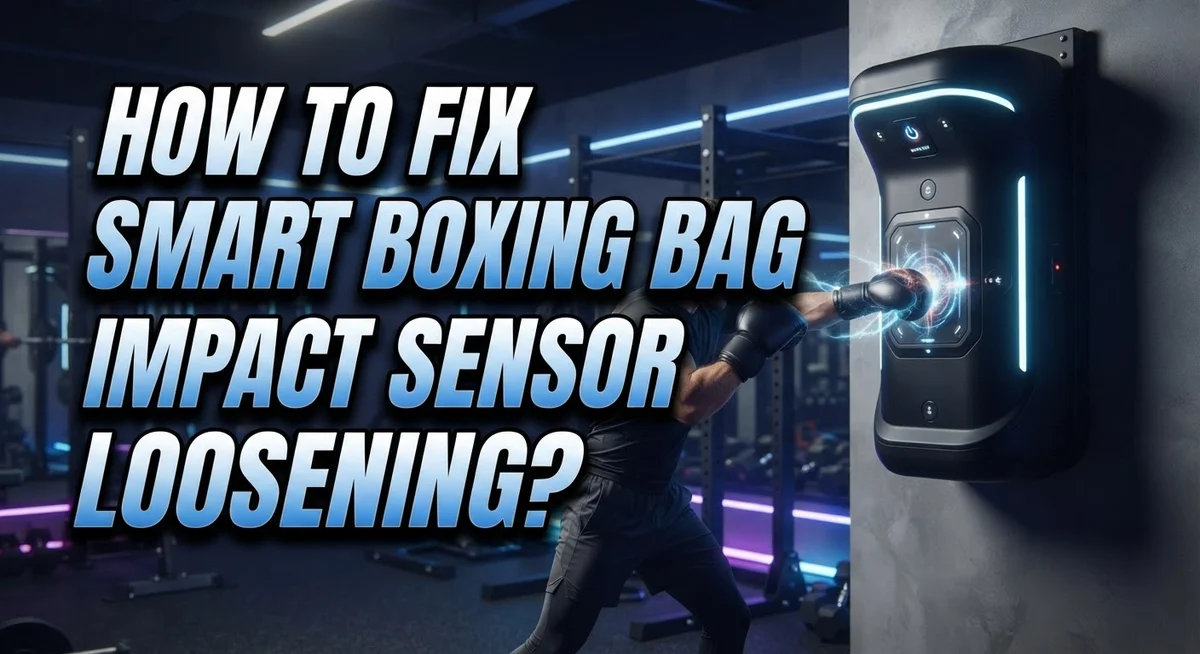
How To Fix Smart Boxing Bag Impact Sensor Loosening?
Your smart boxing bag tracks every punch you throw. But when the impact sensor starts loosening, your data turns messy fast.
Punch counts drop. Power readings feel off. Sometimes the sensor even shifts mid session.
This problem happens to almost every boxer who trains hard. Intensive workouts and heavy mileage put constant stress on the straps and base. Over time, that stress causes the sensor to slide or wobble.
In a Nutshell
- Tighten both straps evenly. Pull the top and bottom straps together. This keeps the sensor flush against the bag surface.
- Stabilize the base first. A wobbly base causes sensor drift. Use carpet tape or a mat with a cutout hole to lock the base in place.
- Check sand levels regularly. If your bag has a sand base, empty and inspect it often. Shifting sand makes the whole bag unstable.
- Reinforce with duct tape when needed. Loose connections benefit from extra duct tape. This adds a quick backup fix between deeper repairs.
- Avoid one-directional punching. Repetitive strikes from the same angle wear straps unevenly. Mix up your punch angles to reduce stress on the sensor.
- Re-tighten after heavy sessions. Intensive training loosens straps faster. Make tension checks part of your post-workout routine.
Why Smart Boxing Bag Sensors Loosen Over Time
Smart boxing bag sensors loosen because they experience constant physical stress during training. Every punch creates vibration and movement that gradually weakens the connection points holding your sensor in place.
The primary cause is repetitive impact force. When you punch the bag, the sensor absorbs shock waves that travel through the mounting brackets and straps. Over time, this repeated pressure causes fasteners to shift slightly outward, creating tiny gaps between the sensor and the bag surface.
Another major factor is base instability. If your bag’s base moves or shifts during workouts, the entire sensor assembly rocks back and forth. This rocking motion acts like a lever, pushing the sensor away from the bag with each strike. A shifting base multiplies loosening problems significantly.
Uneven training patterns also contribute to sensor drift. When you punch from the same angle repeatedly, you create unbalanced force distribution. One side of the sensor experiences more pressure than the other, causing asymmetrical loosening that’s harder to notice at first.
Moisture and temperature changes play a role too. If your training space has humidity fluctuations, the bag material and mounting brackets expand and contract at different rates. This expansion cycle gradually loosens connections over weeks and months.
The straps themselves wear down from constant tension. Fabric straps fray and lose grip. Velcro weakens after repeated fastening and unfastening. Even quality materials degrade when exposed to sweat, friction, and the pulling forces required to keep sensors tight.
Your bag’s weight distribution matters as well. Uneven sand settling inside the base creates tilting, which stresses one side of the sensor mount more than the other. This uneven stress accelerates loosening on the overloaded side.
Understanding these causes helps you prevent future loosening. You’ll recognize which factors apply to your specific training style and environment, allowing you to address them proactively before sensor accuracy drops.
Signs Your Impact Sensor Needs Re-Tightening
Your smart boxing bag will show you clear warning signs before the sensor completely loosens. Learning to spot these signals helps you fix problems early and keep your punch data accurate.
Watch for declining punch counts first. If your bag suddenly records fewer punches than normal, your sensor has likely shifted away from the bag surface. The sensor needs direct contact to register impacts properly. A drop in recorded numbers is your first red flag.
Listen for rattling or loose sounds when you hit the bag. A secure sensor stays silent during strikes. If you hear clicking or movement inside the sensor housing, the straps have probably loosened. This noise means the sensor is bouncing instead of staying flush against the bag.
Check the sensor physically by hand. Push gently on different parts of the bag surface. The sensor should feel solid and immovable. If it shifts or rocks under light pressure, tightening time has arrived. A properly secured sensor resists any movement.
Notice inconsistent punch tracking. Some strikes register while others don’t. This pattern indicates uneven sensor contact. The sensor makes contact during certain punch angles but loses it during others. This happens when loosening is partial rather than complete.
Feel for strap tension changes. Run your fingers along the top and bottom straps. They should feel equally tight. Loose straps feel slack compared to when you first installed them. Uneven tension means one strap has loosened more than the other.
Observe your bag’s position shifting. If your bag moves or tilts during workouts, the base instability is causing sensor drift. A stable base keeps the sensor perfectly positioned. Movement suggests both strap and base problems need attention.
These signs appear gradually, so check your sensor regularly during training sessions. Early detection prevents accuracy loss and extends your sensor’s lifespan.
Step-by-Step: Tightening Sensor Straps Correctly
Start by examining both the top and bottom straps on your sensor. These straps hold your sensor flush against the bag surface. Loose straps mean your sensor cannot read impacts accurately.
Pull the top strap first. Grip it firmly and draw it tight. The strap should feel snug but not painfully tight. You want the sensor pressed firmly against the bag without cutting off circulation or damaging the bag material.
Now move to the bottom strap. Pull it with equal force as the top strap. This keeps the sensor balanced and centered. Uneven pulling causes the sensor to tilt or shift during punches.
Check that both straps have the same tension level. Run your fingers along each strap to feel for differences. If one strap feels looser, adjust it to match the other.
Test the sensor position. Press gently on the bag surface around the sensor. It should not move or shift under your hand. If it does, tighten the straps more.
Pay attention to strap material condition. Worn straps may not hold tension as well as new ones. If straps look frayed or damaged, they might need reinforcement with additional tape.
Tighten straps before every heavy training session. This prevents loosening from building up over time. You only need to spend 30 seconds checking and adjusting both straps.
Avoid over tightening. Too much force can damage the bag material or break the straps. The goal is firm contact, not crushing pressure.
Keep your hands dry when tightening straps. Wet hands slip and prevent proper tension. You will struggle to get the straps tight enough if your hands are sweaty.
After tightening, wait a few minutes before hitting the bag. This lets the sensor settle into its new position. Then perform a few light test punches to confirm accurate readings before your full workout.
Stabilizing the Bag Base to Prevent Sensor Drift
Your bag’s base is the foundation that keeps everything stable during intense training. When the base shifts or moves, your sensor loses contact with the bag surface, causing inaccurate readings and drift.
Start by checking your current setup. Look at where your bag sits on the floor. Does it slide when you punch? Does it tilt to one side? These movements directly affect sensor accuracy and will worsen over time.
Carpet tape is your first solution. Apply it under the entire base of your bag to increase friction between the bag and floor. This simple step prevents sliding during workouts and keeps your sensor steady against the bag material.
Consider adding a mat underneath your bag. Use a rubber or foam mat that matches your workout space. Cut a hole in the mat that matches your bag’s base shape. This creates a pocket that holds your bag in place while you train.
Empty and inspect your bag’s base sand or filler material regularly. Sand can shift during workouts, causing weight distribution problems. When sand settles unevenly, your bag becomes unstable and your sensor drifts. Redistribute the filler to keep weight balanced throughout the base.
Check that your bag sits completely flat on the floor. Tilted bags put uneven pressure on sensors and straps. Use a level tool to verify your setup is straight.
Secure the base straps tightly if your bag has them. These straps hold the base together and prevent internal shifting. Tighten them before heavy training sessions.
Test your base stability before each workout. Push the bag gently in different directions. It should barely move. If your bag shifts easily, your sensor will continue to loosen no matter how tight you make the top and bottom straps.
A stable base combined with proper strap tension keeps your sensor performing accurately throughout all your training sessions.
Maintaining Consistent Strap Tension During Training
Your smart boxing bag sensor needs consistent strap tension to work properly during training. When straps loosen, your sensor loses contact with the bag surface. This causes inaccurate punch readings and tracking errors.
Check your strap tension regularly. Run your fingers along both the top and bottom straps before each training session. Feel for any slack or movement. Loose straps are easy to spot once you know what to look for.
Pull both straps with equal force to maintain balanced pressure. Start with the top strap and grip it firmly. Then move to the bottom strap and apply the same tension level. This even distribution keeps your sensor flush against the bag.
Tighten straps before heavy training sessions. Intensive workouts create more movement and vibration. Your bag experiences more impact stress, which naturally loosens connections over time. Proactive tightening prevents sensor drift before it happens.
Avoid over tightening your straps. Excessive force can damage the bag material or snap the straps themselves. You want straps tight enough that the sensor stays in place, not so tight that you risk equipment damage.
Keep your hands dry when adjusting straps. Wet hands slip and prevent you from achieving proper tension. You might think you’ve tightened them enough when you actually haven’t.
Test sensor position after tightening. Press gently on the bag surface around the sensor area. The sensor should feel solid and immobile. If it still moves slightly, increase strap tension gradually until it stays put.
Make strap checks part of your warm up routine. Spend 30 seconds examining and adjusting tension before you start punching. This simple habit prevents most sensor problems from developing.
Consistent strap maintenance keeps your sensor accurate throughout your entire training program. Small regular adjustments work better than occasional major tightening.
Common Mistakes That Cause Repeated Loosening
Many boxers make simple mistakes that cause their sensor to loosen repeatedly. Understanding these errors helps you keep your equipment working properly.
Neglecting base stabilization is the biggest problem. Your bag sits on a floor that may shift during intense workouts. If the base moves even slightly, the sensor loses contact with the bag surface. You must secure your bag’s foundation before focusing on strap tension alone. A loose base will undo all your tightening efforts within minutes of training.
Inconsistent strap tightening creates ongoing problems. You tighten the straps today, but tomorrow you pull with different force. This uneven tension means one side stays loose while the other gets over tightened. Your sensor never maintains stable contact with the bag. The solution is simple: always pull both straps with equal pressure every single time.
Ignoring early loosening signs allows small problems to become big ones. When you notice the sensor shifting slightly, most people keep training anyway. This continued movement wears down the strap material faster. The sensor drifts further with each punch. Catching looseness early prevents damage to your equipment.
Repetitive one directional punching causes uneven wear on your bag and straps. You always hit the same spot with the same angle. This creates pressure imbalances that loosen the sensor on one side first. Your training becomes less varied, and your equipment fails faster.
Skipping regular strap checks between sessions is another common error. You assume yesterday’s tightness carries over today. Environmental changes, temperature shifts, and material settling all affect strap tension naturally. A quick check before each workout takes thirty seconds and prevents most loosening issues.
These mistakes compound over time. Fix one problem while ignoring others, and your sensor keeps loosening. Address all these issues together for lasting results.
Troubleshooting Persistent Sensor Accuracy Issues
When your smart boxing bag sensor keeps losing accuracy despite your efforts, the problem usually stems from deeper issues than simple loosening. Persistent accuracy problems signal that your sensor isn’t making consistent contact with the bag surface during strikes.
Start by examining your sensor’s actual position on the bag. Press your fingers around the sensor area to feel if it moves independently from the bag material. A sensor that shifts even slightly will give you inconsistent readings. The sensor must stay perfectly flush against the bag at all times.
Check your strap attachment points carefully. Straps can loosen at the connection points where they attach to the bag itself, not just at the buckles. These connection points experience constant stress during training. Inspect where each strap fastens to ensure nothing has cracked or pulled away from the bag material.
Your bag’s internal structure matters more than most people realize. If sand or filler material inside has shifted, it changes the bag’s shape and how the sensor sits against it. Gently rotate and manipulate your bag to redistribute the filler evenly. This simple step often fixes accuracy issues that strap tightening alone cannot solve.
Consider the mounting bracket itself. Over time, the bracket that holds your sensor can develop micro cracks or become slightly bent from repeated impacts. Even small bracket deformations prevent the sensor from sitting properly against the bag surface.
Test your sensor accuracy by throwing the same punch multiple times. If readings vary significantly between identical strikes, your problem is sensor contact, not calibration. This tells you to focus on positioning and stability rather than looking for electronic solutions.
Persistent accuracy issues require systematic inspection of every connection point. Address the foundation first, then work upward to the sensor itself. This approach catches problems that casual tightening misses.
Final Thoughts
A loose sensor does not mean your smart boxing bag is broken. It usually means a few small parts need attention.
Straps, base stability, and sensor position work together. When one part slips, the whole system loses accuracy.
Fixing this problem is simple. Tighten your straps evenly. Check your base for movement. Add grip where needed.
You do not need special tools or technical skills. Most fixes take just a few minutes before or after training.
Consistency matters more than perfection. A quick check before each session prevents bigger problems later.
Think of sensor maintenance like stretching before a workout. It only takes a moment, but it protects you from setbacks.
Your bag depends on a stable base. Your sensor depends on steady straps. Both work together to give you accurate feedback.
Skip one part, and the other struggles to compensate. This is why full inspections work better than quick fixes.
Training data only helps if it stays accurate. A sensor that shifts during your session gives you numbers you cannot trust.
Small habits build long term results. Checking your equipment becomes second nature after a few weeks.
Soon, you will notice loosening before it affects your workout. This awareness saves time and keeps your training on track.
Every boxer pushes their equipment differently. Your bag might loosen faster if you throw powerful combinations or train often.
Pay attention to your own patterns. Adjust your maintenance routine based on how you train, not just general advice.
A well maintained sensor setup rewards you with reliable data. This helps you track real progress instead of guessing.
Take these steps seriously, and your equipment will serve you well. Your smart boxing bag can only perform as well as its weakest connection point.
Keep it tight, keep it stable, and keep training with confidence.
Frequently Asked Questions
How tight should the straps actually be?
Pull your straps until the sensor sits flush against the bag surface. The sensor should not move when you push it gently with your finger. Avoid over tightening, as this can damage the strap material or warp your sensor over time.
Think of it like this: tight enough to stay put, but not so tight that you strain the connection points. If you can wiggle the sensor at all, tighten more. If the strap feels like it might tear, back off slightly.
When should I re tighten the straps?
Check your straps after every heavy training session. If you notice your sensor readings dropping or becoming inconsistent, tighten immediately. Most boxers benefit from a quick strap check before each workout anyway.
This takes 30 seconds and prevents bigger problems later. Heavy impact sessions loosen straps faster than light practice rounds. Listen to your bag. If something feels off, your straps probably need attention.
What’s the best way to stabilize the bag base?
Use carpet tape under the base to prevent sliding during intense combinations. Cut a mat with a hole that matches your bag’s base shape for extra grip. This keeps your bag planted firmly in one spot.
Base movement causes sensor misalignment more often than people realize. A stable foundation means your straps stay tight and your sensor stays accurate. These two fixes work together to solve most loosening problems.
Can duct tape help with loose connections?
Yes, duct tape can reinforce areas where straps connect to your bag. Wrap it around loose attachment points for temporary support. This works best as a quick fix while you plan a more permanent solution.
Duct tape is not a long term answer, but it buys you time. Use it to stabilize things until you can properly re tighten or replace worn straps.

Hi, I’m Rue Hessel, the founder and voice behind TheGenTool. I’m a passionate tech enthusiast who loves exploring the latest gadgets, smart devices, and electronics that shape our everyday lives. Through my website, I share honest, hands-on reviews of trending Amazon products to help you make smarter and more confident buying decisions.