
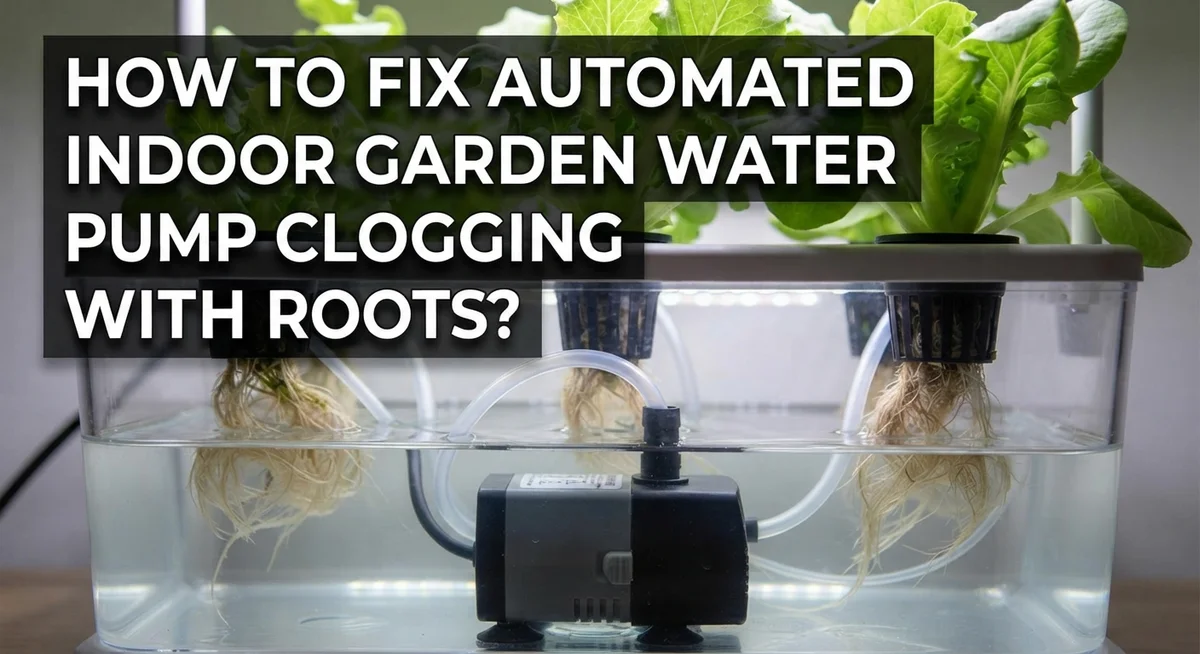
How To Fix Automated Indoor Garden Water Pump Clogging With Roots?
Your indoor garden pump stops working. You check it and find roots wrapped around the intake. Sound familiar?
This is one of the most common problems in automated indoor gardens. Roots grow fast. They spread into places they should not go, including your water pump.
Root clogging can slow water flow or stop your pump completely. Left alone, it can damage your whole system. Plants may wilt or stop growing because water and nutrients cannot reach them.
In a Nutshell
- Roots cause most pump clogs. They grow into the intake or drain pipes and block water flow. Loose growing media also slips into the pump and adds to the problem.
- Fixing a clog starts with cleaning. Remove the pump, rinse the sponge, and clear away any roots or debris stuck inside. This often solves the issue right away.
- Trim roots regularly. Cut back long roots before they reach the pump or drain pipes. This keeps water moving freely through your system.
- Use contained growing media. Media that stays in the neck cup cannot travel into the pump. This simple choice prevents many future clogs.
- Check your system often. Look for slow water flow or strange pump noises. These are early signs that roots may be causing trouble.
- Prevention beats repair. Regular checks and trims keep your pump running smoothly. This saves you time and stress in the long run.
Why Roots Clog Indoor Garden Water Pumps
Roots clog indoor garden water pumps for several straightforward reasons. Understanding these causes helps you stop problems before they start.
Loose growing media is a primary culprit. When your growing medium breaks apart or stays loose, tiny particles wash into the pump intake. These particles mix with roots and create blockages that slow or stop water flow completely. The sponge around your pump fills with debris, and the system backs up.
Overgrown roots naturally seek water sources. Roots grow toward moisture and nutrients. When roots become too long, they extend into drain pipes and wrap around pump components. This root mass traps other debris and creates dense clogs that are hard to clear.
Roots enter drain pipes and cause flooding. Long roots push into drainage systems looking for water. Once inside, they expand and block the pipe opening. Your system cannot drain properly, water backs up, and the pump works harder than it should.
Plant material breaks loose and enters the system. Dead leaves, stem pieces, and algae fragments float through your water. These materials get sucked into the pump intake and stick to wet surfaces. Combined with root growth, they form stubborn blockages.
Debris accumulates around the pump sponge. The sponge that filters water fills with particles over time. Without regular cleaning, this sponge becomes a trap for roots and other material. Water cannot flow freely, and your pump loses suction power.
The key takeaway is simple: root clogs develop gradually from neglect, not overnight. Regular root trimming, contained growing media, and frequent sponge cleaning prevent most clogging problems. Catching root growth early stops expensive pump failures down the road.
Signs Your Pump Is Clogged With Roots
Your pump shows clear warning signs before it stops working completely. Catching these early signals saves you time and keeps your plants healthy.
Reduced water flow is the first sign most gardeners notice. Water moves slower through your system than usual. You might see the reservoir draining at half speed. This happens because roots or debris start blocking the pump intake.
Strange pump noises tell you something is wrong inside. The pump might make grinding, rattling, or squealing sounds. These noises mean roots or debris are hitting the pump blades. A healthy pump runs quietly without unusual sounds.
Water leaking from the pump indicates root damage to internal seals. You see drips around the pump base or connection points. This leaking wastes water and signals that roots have pushed into tight spaces inside the pump.
Uneven water distribution across your garden beds reveals clogging problems. Some plants get plenty of water while others stay dry. This happens when roots block certain channels in your drain system.
Algae growth accelerates when water movement slows down. Stagnant water creates perfect conditions for algae blooms. You notice green or brown film forming in your reservoir faster than normal.
The pump stops entirely as the final warning sign. Water no longer flows at all. This means the clog has become severe and blocking most water passage.
Check your system every few days. Look for these signs before they become serious problems. Early detection means simple cleaning fixes instead of major repairs. Listen carefully to your pump sounds and watch your water flow patterns closely. These observations help you catch root clogs at their earliest stages.
Step-by-Step Guide To Clearing Root Clogs From Your Pump
Start by turning off your system completely. Safety comes first when you work with pumps and electrical components. Unplug everything before you touch any parts.
Remove the pump from your indoor garden setup. Most pumps sit in the water reservoir or attach to the side. Gently disconnect the intake and discharge tubes. Set the pump on a clean surface where you can work easily.
Rinse the pump sponge under running water. This sponge filters debris and root particles. Squeeze it gently while water flows through. If roots are wrapped around the sponge, carefully unwrap them by hand. Do not pull hard or you may tear the sponge.
Look inside the pump intake opening with a flashlight. You will see roots or debris blocking the passage. Use a small brush or soft cloth to remove visible blockages. A soft toothbrush works well for this task. Push gently to avoid damaging internal pump parts.
Check the discharge tube for root intrusion. Roots often grow into these pipes looking for water. Run water through the tube or use a thin brush to clear it. If roots are deeply embedded, soak the tube in water for a few minutes to soften them.
Inspect the pump body for cracks or damage. Root pressure can damage seals and internal components. If you see leaks or cracks, the pump may need replacement.
Rinse everything thoroughly with clean water. Make sure no debris remains in any opening. Reconnect the tubes firmly but do not overtighten them.
Refill your reservoir with fresh water. Plug in the pump and run it for five minutes to test. Listen for normal operation sounds and check for leaks before returning plants to your system.
How To Safely Trim and Manage Root Growth
Root trimming is essential for keeping your pump healthy. You should trim roots regularly before they become too long and cause problems. Start by examining your plants every week to catch growth early.
Use clean, sharp tools to trim roots safely. Cut away roots that grow toward the pump intake or drain pipes. Make cuts just above where roots branch, leaving healthy portions intact. This approach encourages new root growth without harming your plants.
Check your drain pipes frequently for root intrusion. Roots naturally seek water sources, so they gravitate toward drainage areas. If you spot roots entering pipes, remove them immediately. This prevents flooding and system backups that damage your pump.
Contain your growing media properly to reduce debris entering the system. Use net pots with solid collars that hold media in place. This simple step prevents loose particles from washing into pump components.
Monitor root patterns in your reservoir. Healthy roots should stay in the growing medium. Roots dangling freely in water indicate you need to trim more aggressively. Watch for roots clustering around the pump intake area, which signals clogging risk.
When trimming, be gentle with your plants. Never remove more than one third of the root system at once. Your plants need adequate roots for nutrient absorption and stability.
After trimming, inspect your pump sponge immediately. Root particles often lodge in the filter during trimming. Rinse the sponge thoroughly under clean water. Replace it if you see visible damage or heavy debris buildup.
Establish a trimming schedule based on your plant growth rate. Fast growing plants need weekly checks. Slower growers may need attention every two weeks. Consistent trimming prevents emergency situations where roots completely block your system.
Preventing Future Clogs With Proper Growing Media and Setup
Your growing media choice directly affects whether roots clog your pump. Contained growing media stays in place and doesn’t crumble into your water system. Loose materials like perlite or rock wool particles easily escape into your reservoir and pump intake.
Choose media that holds together well. Sponge cubes, net pots with proper liners, and structured foam systems keep roots contained. These materials prevent small pieces from breaking apart and floating toward your pump.
Set up your system with physical barriers between growing areas and water lines. Use fine mesh screens or filter baskets around pump intakes. These catch any stray media particles before they reach sensitive pump components.
Position your drain pipes away from root zones. Roots naturally grow toward water sources, so keep drainage tubes elevated or protected. This simple layout change stops roots from entering pipes and causing blockages.
Your reservoir setup matters too. Keep the water level consistent so roots don’t reach exposed drain openings. A stable water level reduces the suction that pulls roots into pipes.
Regular inspection prevents small problems from becoming big ones. Check your growing media weekly for breakdown or loose particles. Remove any debris floating in your reservoir before it reaches the pump.
Change your reservoir water every two to three weeks. Fresh water reduces algae growth and removes accumulated particles. Dirty water contains more debris that can clog pump components.
Establish a maintenance routine based on your plant growth speed. Fast growing plants need more frequent checks. Slow growers allow longer intervals between inspections.
Your pump stays healthy when your system design prevents root access from the start.
Routine Maintenance Schedule for Long-Term Pump Health
A routine maintenance schedule keeps your pump running smoothly and prevents root clogs before they start. Set a maintenance day each week to inspect your system thoroughly. This consistent approach catches problems early when they’re easy to fix.
Check your pump sponge twice weekly. Remove it gently and rinse it under clean running water. A clogged sponge restricts water flow and puts stress on your pump motor. If the sponge looks brown or discolored, it needs cleaning even if you just cleaned it days ago.
Inspect your drain pipes every three days. Look for roots growing into the openings or blocking the tubes. Roots grow quickly in hydroponic systems, so frequent checks matter. Remove any roots you find immediately to prevent them from spreading deeper into your system.
Trim plant roots once weekly or based on your specific growth rate. Use clean, sharp tools and cut gently to avoid damaging your plants. Check your pump sponge right after trimming since loose root pieces often end up there.
Change your reservoir water every two to three weeks. Fresh water carries fewer particles that could clog your pump. During water changes, inspect the pump body for any visible damage or cracks.
Monitor your growing media weekly for breakdown or loose particles escaping into the water. Particles entering your system accelerate clogging. If your media deteriorates quickly, consider switching to a more stable option.
Keep a simple log of your maintenance tasks. Write down what you cleaned, what you trimmed, and any problems you noticed. This record helps you spot patterns in your system’s behavior and adjust your schedule accordingly. Consistency prevents emergencies.
Common Mistakes That Lead To Recurring Clogs
Most people damage their indoor garden systems by making the same preventable mistakes. Understanding these errors helps you keep your pump running smoothly.
The biggest mistake is allowing roots to grow unchecked. Many gardeners think roots need space to spread freely. This backfires quickly. Long roots find their way into drain pipes and pump intakes. Once roots enter these spaces, they tangle and block water flow completely. Your system stops working in days.
Another common error involves choosing the wrong growing media. Loose, crumbly materials break down over time. Particles escape into your water reservoir and get sucked toward your pump. This debris clogs the intake screen and sponge filter. The pump works harder and eventually fails. Media that holds together prevents this problem entirely.
People also ignore early warning signs. Reduced water flow is your first alert. When you notice slower circulation, roots are likely blocking something. Waiting another week turns a small issue into a major repair job. Catching problems early saves time and money.
Delaying root removal from drain pipes causes system flooding. Roots grow thick and create complete blockages. Water backs up into your growing area and drowns your plants. Regular inspections catch roots before they reach drain systems.
Many gardeners skip routine cleaning of pump sponges. Trapped debris and root fragments accumulate in the filter. Your pump works harder with each passing day. A clogged sponge reduces water pressure and damages pump components faster.
The key is being consistent with maintenance. Check your system regularly. Trim roots promptly. Clean your filters often. These simple actions prevent 90 percent of pump clogs before they start.
Troubleshooting Persistent Flow Problems After Cleaning
When water flow remains weak even after you’ve cleaned your pump, the problem likely extends beyond surface debris. Root fragments can lodge deep inside pump chambers where a quick rinse won’t reach them. You need to disassemble your pump completely and flush each internal passage with clean water.
Start by removing the pump from your system. Take apart every removable component, including the intake valve and discharge tube. Hold each piece under running water and use your fingers to gently clear any trapped material. Pay special attention to small openings where roots compress into tight spaces.
If water still flows poorly after reassembly, the impeller itself may be damaged. Roots can wrap around moving parts and cause permanent wear. Check whether the impeller spins freely when you manually turn it by hand. A stuck impeller means you need to replace your pump.
Sometimes persistent flow problems indicate roots have entered your drain pipes upstream. Water backs up into the pump chamber instead of flowing freely through the system. Inspect your entire drain line by disconnecting it and pouring water through from the top. Listen for gurgling sounds that suggest blockages deeper in the pipes.
Consider installing a fine mesh screen at your drain pipe entrance. This catches root fragments before they travel toward your pump. The screen needs cleaning every few days during active growth periods.
If flow problems continue after these steps, your pump may have internal corrosion from mineral buildup combined with root damage. This requires replacement. Document when these issues start so you can adjust your maintenance routine and prevent repetition with your next pump.
Final Thoughts
Root clogs don’t have to ruin your indoor garden. Once you understand why they happen, you can stop them before they start.
Prevention beats repair every single time. A quick weekly root trim takes minutes. Fixing a flooded system takes hours.
Your pump works best when roots stay where they belong. Keep them in the growing media. Keep them out of your pump housing and drain lines.
Think of maintenance as a habit, not a chore. Check your sponge. Inspect your pipes. Trim what needs trimming. These small actions add up to big protection.
Consistency matters more than perfection. You don’t need to be flawless with your schedule. You just need to show up regularly and pay attention.
Watch for warning signs early. Weak water flow, strange noises, or slow drainage all tell you something’s wrong. Address these signs right away.
Don’t wait until your pump stops working completely. By then, roots may have caused damage that’s harder to fix.
Remember that every hydroponic system is different. Fast growing plants need more frequent attention. Slower growing varieties give you more breathing room.
Adjust your routine based on what your plants actually need. There’s no single perfect schedule that works for everyone.
If you’ve tried everything and problems persist, don’t get discouraged. Sometimes older pumps simply wear out. Sometimes system design needs small changes.
The good news is that most root clogging issues are completely preventable. With the right habits, your indoor garden can run smoothly for a long time.
Your plants depend on clean water flow to thrive. Give your pump the attention it deserves, and it will keep your garden healthy season after season.
Frequently Asked Questions
How do I know if roots are clogging my pump?
Watch for reduced water flow to your plants. The water level in your reservoir may drop more slowly than usual. You might hear the pump making unusual sounds or struggling to push water through the system.
Check the pump intake area for visible root fragments or plant material. If water barely trickles out of your drip lines, roots have likely entered the drain pipes upstream.
Can I prevent root clogs without trimming roots constantly?
Yes. Use growing media that stays contained in the net cup or collar around your plants. Loose media particles escape into the water and clog the pump faster than roots do.
Keep roots physically separated from drain pipes by using pipe guards or screens. This stops roots from entering the system in the first place. Regular sponge cleaning around the pump intake also catches debris before it causes problems.
What’s the fastest way to clean a clogged pump?
Remove the pump from your system first. Rinse the sponge filter under clean water to remove loose particles and root fragments. Check the pump intake opening for any blockages you can see.
Reassemble and test water flow before reconnecting everything. If flow is still weak, the impeller inside may need inspection or the pump may have mineral buildup requiring deeper cleaning.
Why does my pump clog again so quickly after cleaning?
You’re likely not addressing the root cause. If loose growing media keeps entering the system, cleaning alone won’t fix it permanently. Switch to contained media or add a mesh screen at your drain entrance.
If roots continue growing into drain pipes, trim them more frequently or install a physical barrier. The real solution involves stopping new debris and roots from reaching the pump, not just cleaning after clogs happen.

Hi, I’m Rue Hessel, the founder and voice behind TheGenTool. I’m a passionate tech enthusiast who loves exploring the latest gadgets, smart devices, and electronics that shape our everyday lives. Through my website, I share honest, hands-on reviews of trending Amazon products to help you make smarter and more confident buying decisions.