
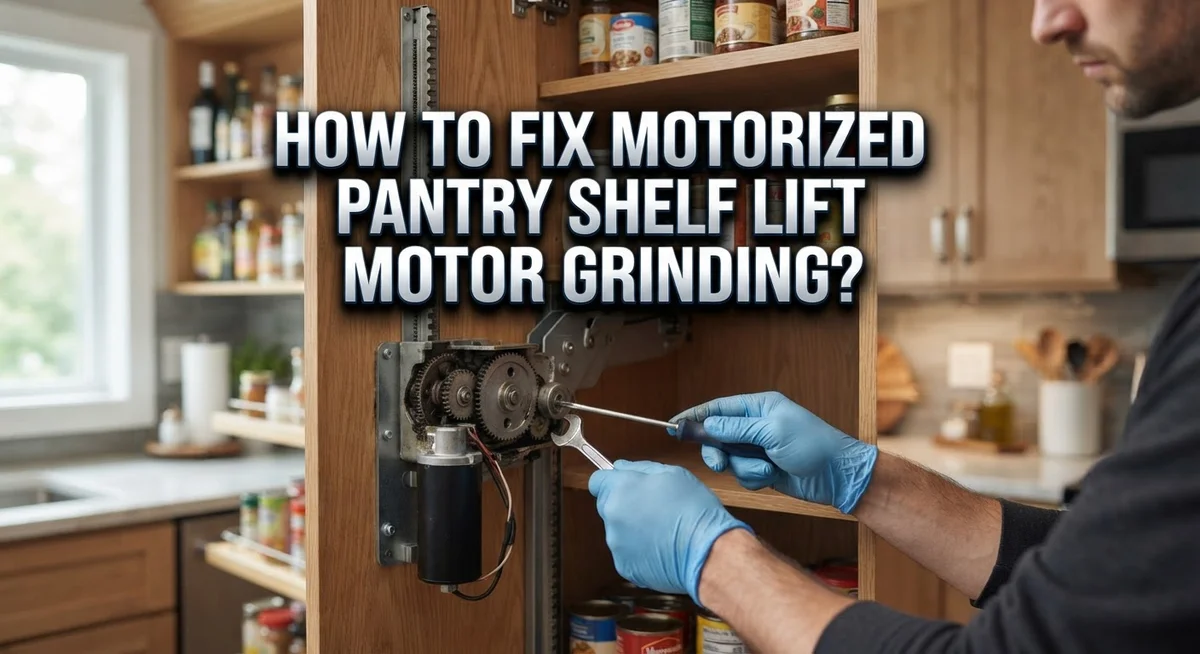
How To Fix Motorized Pantry Shelf Lift Motor Grinding?
That grinding noise from your motorized pantry shelf lift is hard to ignore. It sounds harsh. It makes you worry something is badly broken.
The good news is that grinding does not always mean motor failure. Most of the time, it points to loose connections, mechanical binding, or simple misalignment.
This guide walks you through the exact steps to find and fix the problem. You will learn how to power cycle your unit properly. You will also check cable connections and inspect the lift mechanism for friction points.
In a Nutshell
- Grinding noise usually points to friction, binding, or misalignment in the lift mechanism. It rarely means the motor is dead.
- Start with a power cycle. Turn off the unit, unplug it, and wait two minutes before restarting.
- Check all cable connections. Loose motor and control cables are a top cause of grinding sounds.
- Listen carefully for humming or vibration. This confirms the motor still has power running to it.
- Inspect for smooth motion. Binding or jerking during operation signals a mechanical issue, not an electrical one.
- Retighten all screws and bolts. Loose hardware often creates the friction that leads to grinding.
- Sand any rough edges after cuts. This small step prevents future binding in the track or frame.
- Watch for moisture damage too. Swollen shelf structures overnight can throw off alignment fast.
- Most fixes take under two hours. With the right checks, you can solve this yourself without calling a repair tech.
Understanding Why Your Pantry Lift Motor Is Grinding
Your motorized pantry shelf lift motor grinds because something inside the mechanism is rubbing or stuck. This friction creates that unpleasant noise you hear when the shelf moves up or down.
The most common culprit is a loose connection. Motor cables and control wires can wiggle free over time. When they’re not secure, they rub against moving parts and cause grinding sounds.
Mechanical binding is another frequent cause. This happens when the shelf doesn’t move smoothly along its track. Misalignment, swelling from moisture, or debris in the path can all create binding.
Loose hardware contributes to grinding too. Screws and bolts work their way free as the motor cycles up and down repeatedly. Each loose bolt adds friction to the system.
Moisture damage is sneaky. If your pantry shelf swells overnight from humidity, it can bind against the lift mechanism. This binding forces the motor to work harder and creates grinding sounds.
Poor installation can also be the problem. If the shelf wasn’t aligned correctly when installed, parts rub against each other during operation. This friction builds up and becomes noticeable as grinding.
The key insight is this: grinding usually means mechanical friction, not motor failure. Your motor is probably working fine but struggling against resistance. The grinding sound is your signal that something is preventing smooth operation.
Understanding the source matters because it changes how you fix it. A loose cable needs tightening, not replacement. A misaligned shelf needs adjustment, not a new motor. Binding from moisture needs drying and smoothing, not electrical repair.
Start by accepting that grinding is fixable. Most causes are simple mechanical issues. Your next step is identifying which problem your specific lift system has.
Safety First: Preparing to Diagnose the Problem
Before you touch anything on your motorized pantry shelf lift, safety comes first. Your primary goal is to prevent injury and avoid making the problem worse.
Start by unplugging the unit from the wall outlet. This is non negotiable. Even though you are only diagnosing the problem, electrical safety matters. Wait a full two minutes after unplugging. This allows any residual power to drain from the system.
Next, clear the area around your pantry lift. Remove any items stored on the shelf or nearby. You need full access to inspect the motor and lift mechanism without obstacles. Make sure you have adequate lighting in the space. A flashlight or headlamp helps you see connection points and mechanical parts clearly.
Gather basic tools before you start. You will likely need a screwdriver set, a wrench, and possibly a socket set. Keep these tools within arm’s reach so you do not have to leave your work area repeatedly.
Check that the shelf is in the down position before you begin any inspection. If the shelf is raised, lower it manually or use the control panel while the unit is still plugged in. Never work underneath a raised shelf that could fall unexpectedly.
Wear safety glasses to protect your eyes from dust or debris. If the motor has been running, it may be warm. Let it cool for several minutes before touching it directly.
Finally, take a moment to locate your unit’s power switch and emergency stop button if one exists. Know exactly where these are positioned. This knowledge helps you respond quickly if something unexpected happens during your diagnosis.
Step-by-Step Guide to Diagnosing the Grinding Noise
Now that you’ve prepared your workspace and understood the grinding issue, it’s time to listen actively to what your motor is telling you.
Start by locating the motor unit itself. Most motorized pantry shelves have the motor mounted either at the top or bottom of the lift mechanism. Once you find it, turn the unit back on and listen carefully to where the grinding sound originates. Does it come from the motor housing itself, or from the shelf track? This distinction matters.
Pay attention to the sound’s characteristics. A grinding noise that happens only during upward movement suggests different problems than grinding that occurs during downward movement or both directions. Listen for any humming sounds underneath the grinding, which indicates the motor is receiving power but struggling against resistance.
Next, observe the shelf’s movement pattern. Watch how the shelf rises and falls. Does it move smoothly, or does it jerk and stutter? Smooth operation with grinding suggests the issue is internal to the motor. Jerky movement with grinding points to mechanical binding in the track or lift arms.
Check whether the grinding is constant or intermittent. Constant grinding throughout the cycle suggests a persistent friction point. Intermittent grinding that comes and goes might indicate a loose component that only catches at certain positions.
Finally, feel the motor housing carefully after it runs for 30 seconds. A motor working normally stays warm but not hot. An extremely hot motor combined with grinding suggests internal damage.
Document your findings. Note the exact timing, location, and characteristics of the grinding. This information helps you identify whether the problem is electrical or mechanical, which guides your next repair steps.
Fixing Mechanical Binding and Misalignment Issues
Mechanical binding happens when parts of your lift mechanism rub against each other instead of moving smoothly. This friction creates that grinding sound you hear. Misalignment is the usual suspect here.
Start by checking all connection points where the motor cables attach to the lift frame. Loose connections cause vibration, which leads to binding. Tighten every bolt and screw you can access on the motor assembly. Pay special attention to the brackets holding the motor in place.
Next, inspect the shelf track or guide rails. Run your hand along the entire length to feel for rough spots or debris. Dust and small particles often get trapped in these areas. Clean out anything blocking smooth movement.
Look at how the shelf sits on its support structure. The shelf should move up and down without tilting or catching. If one side rises faster than the other, misalignment is occurring. This uneven movement creates binding pressure on the motor.
Check for any bent or warped components in the lift mechanism. Even small deviations from straight cause friction. Moisture can swell wooden shelves overnight, creating binding that wasn’t there before.
After cleaning and tightening everything, manually move the shelf up and down a few times. It should glide smoothly without resistance. Listen for that grinding noise during this test.
If grinding persists after addressing connections and alignment, the motor itself may have internal damage. However, most grinding issues resolve once you eliminate mechanical friction points. Take your time inspecting each component. Rushing this step means missing the actual problem.
Checking and Securing Motor and Control Cable Connections
A loose motor or control cable connection is one of the most common reasons your pantry shelf lift grinds. This step takes just minutes but often solves the problem completely.
Start by locating all connection points. Your motor has cables that run to the control box or power supply. Follow these cables from the motor unit down to where they connect. Look for any visible gaps or loose fittings along the entire length.
Check each connection point carefully. Motor connections typically use either screw terminals or plug connectors. For screw terminals, use a small wrench or screwdriver to tighten each bolt by turning clockwise. Do not over tighten, as this can damage the connector. For plug connectors, pull them apart gently and push them back in firmly until you hear a click.
Inspect the cable sheathing for damage. Look along the entire length of each cable for cuts, fraying, or exposed wires. Damaged cables can cause electrical issues that make the motor grind or stall. If you spot any damage, the cable needs replacement.
Wiggle test the connections. With the unit unplugged, gently try to move each cable connection side to side. It should not move at all. If it shifts, tighten it more.
Now plug the unit back in and test. Turn on the lift and listen for grinding. Many grinding sounds disappear once all connections are secure. If grinding continues, move on to checking mechanical alignment and the motor itself. This connection check typically takes under 15 minutes and prevents unnecessary motor replacement.
Preventive Maintenance Tips for Smooth Long-Term Operation
Regular maintenance stops grinding before it starts. Your motorized pantry shelf lift works best when you keep it clean and properly lubricated.
Clean the motor area monthly. Use a dry cloth to wipe dust and debris from the motor housing. Dust buildup creates friction and forces the motor to work harder. Pay special attention to any vents or openings on the motor unit.
Lubricate moving parts every three months. Apply appropriate lubricant to the lift mechanism’s moving joints and pivot points. Check your manual for the correct lubricant type. Proper lubrication reduces grinding sounds and extends motor life.
Inspect cables and connections quarterly. Even tight connections can loosen over time. Go through each connection point and ensure everything remains secure. A simple retightening prevents many grinding issues before they develop.
Check the shelf alignment regularly. A misaligned shelf creates unnecessary friction. Verify the shelf moves smoothly up and down without binding. If you notice any hesitation or jerking, stop use and inspect immediately.
Monitor humidity levels in your pantry. Moisture causes wood swelling and metal corrosion. Both problems lead to binding and grinding. Keep your pantry dry and well ventilated when possible.
Test the motor monthly. Run the lift through several complete cycles. Listen for unusual sounds. Feel the motor housing for excessive heat. These simple checks catch problems early.
Keep the manual accessible. Your specific model may have unique maintenance requirements. Reference the manual annually to confirm you’re following the right schedule.
Preventive maintenance takes just minutes each month. This small effort prevents costly repairs and keeps your pantry shelf functioning smoothly for years.
Common Mistakes That Cause or Worsen Motor Grinding
Grinding noises from your motorized pantry shelf lift often stem from mistakes you can easily avoid. Understanding these errors helps you prevent costly damage and keeps your system running smoothly.
Skipping the power cycle is a frequent mistake. Many people assume the motor is broken without first resetting the system. Always turn off the unit, unplug it from the wall, and wait two minutes before plugging it back in. This simple step clears temporary electrical glitches that cause grinding sounds.
Ignoring loose connections ranks as the top culprit. Motor cables and control connections loosen over time from vibration and use. You may hear grinding when electricity cannot flow properly through loose terminals. Check every connection point where cables attach to the motor and control box. Tighten any loose screws or connectors you find.
Allowing moisture damage worsens grinding problems significantly. Wood shelves absorb moisture overnight, causing them to swell and bind against the lift tracks. This creates friction and grinding as the motor struggles to move the shelf. Keep your pantry dry and address humidity issues promptly.
Misaligning the shelf during installation causes mechanical binding from day one. If the shelf sits crooked on its support structure, moving parts rub against each other instead of sliding smoothly. The motor then grinds as it fights against this friction.
Neglecting regular maintenance lets small problems become big ones. Dust buildup on the motor and dried lubricant on moving parts increase friction gradually. By the time you notice grinding, significant wear has already occurred.
Avoiding these mistakes keeps your motorized shelf lift functioning quietly and reliably for years.
When to Escalate: Signs of Deeper Mechanical Problems
Motor grinding that persists after basic troubleshooting signals deeper mechanical issues. You need to recognize when a professional should handle the repair.
Continuous grinding despite secure connections means internal motor damage likely exists. The motor’s bearings may wear out or the internal shaft could be misaligned. These problems require professional diagnosis because opening the motor yourself risks further damage.
Grinding combined with burning smells indicates serious trouble. A burning odor means the motor is overheating from excessive friction or electrical stress. Stop using the unit immediately. Continued operation can cause electrical fires or complete motor failure.
Jerking or stuttering movements suggest gear or transmission problems inside the lift mechanism. The shelf may move unpredictably or freeze mid cycle. This creates safety hazards since the shelf could drop unexpectedly.
Visible cracks in the motor housing require professional replacement. Cracks expose internal components to dust and moisture, which accelerates failure.
Grinding that worsens over days or weeks shows progressive mechanical breakdown. Small problems compound into major failures. Early intervention prevents complete system collapse.
Moisture damage creating rust or corrosion needs expert assessment. Rust on metal components and swollen wood indicate water exposure. These conditions require structural repair beyond simple lubrication.
Unusual vibrations throughout the shelf unit point to severe misalignment or bearing failure. Excessive vibration damages surrounding cabinetry and threatens structural integrity.
When you notice any of these signs, stop operating the lift. Continuing to use a damaged motorized shelf creates safety risks and increases repair costs. Contact a qualified technician who specializes in motorized furniture mechanisms. They can diagnose internal problems accurately and perform repairs safely.
Final Thoughts
Motor grinding sounds feel alarming at first. But most cases have simple fixes.
Loose connections cause the majority of grinding noises. A quick check of your cables often solves the problem completely.
Power cycling your unit works surprisingly well too. Turn it off, unplug it, and wait two minutes before restarting.
This simple reset clears minor glitches. It also gives you a chance to listen for motor sounds without shelf movement interference.
Mechanical binding ranks as the second most common cause. Check for smooth motion whenever you operate the lift.
Any jerking or resistance points to alignment issues. These issues get worse if left unaddressed for too long.
Moisture remains a sneaky culprit many owners overlook. Overnight swelling in shelf materials creates friction that sounds like motor trouble.
Sanding rough edges after cuts prevents future binding. This small step saves you from repeat grinding problems down the road.
Most repairs take under two hours to complete. You do not need special tools or advanced skills for this work.
Start with the easiest fixes first. Check connections, cycle power, and inspect for binding before assuming motor failure.
Patience pays off during this process. Many owners fix grinding issues without ever calling a professional.
Your motorized pantry shelf lift should run quietly once problems get resolved. Grinding noises rarely mean the motor itself failed.
Take time to inspect each component methodically. This approach helps you find the actual cause faster.
With basic troubleshooting and regular care, your lift system stays reliable. Grinding motors become smooth, quiet operators again.
Frequently Asked Questions
What causes a motorized pantry shelf lift motor to grind?
Motor grinding happens when mechanical friction or misalignment occurs inside your lift system. The most common culprit is loose connections between the motor and control cables. When bolts or screws aren’t tight, vibration creates that grinding sound. Mechanical binding from improper shelf alignment during installation also triggers grinding. If moisture got into your pantry, swelling or rust can cause friction too.
How do I fix motor grinding at home?
Start with a power cycle. Turn off your unit, unplug it from the wall, and wait 2 minutes before plugging back in. This simple reset clears minor glitches. Next, check every motor and cable connection to ensure they’re secure. Tighten all screws and bolts with the appropriate tools. Listen for smooth humming without grinding sounds during operation. If your shelf jerks or resists movement, the alignment needs adjustment.
Should I sand down rough edges on my pantry shelf?
Yes. If you made cuts to install your motorized shelf, rough edges can bind against the lift mechanism. Sand all cut edges smooth to prevent friction. This quick step prevents grinding problems before they start and keeps your motor running quietly.
When should I call a professional for motor grinding?
Contact a professional if grinding persists after securing all connections. Continuous grinding despite tight bolts suggests internal motor damage. Burning smells, visible cracks in the motor housing, or progressive worsening over weeks all signal deeper problems requiring expert repair or replacement.

Hi, I’m Rue Hessel, the founder and voice behind TheGenTool. I’m a passionate tech enthusiast who loves exploring the latest gadgets, smart devices, and electronics that shape our everyday lives. Through my website, I share honest, hands-on reviews of trending Amazon products to help you make smarter and more confident buying decisions.