How To Fix Electric Fireplace Heater Blower Fan Rattling?
That annoying rattle from your electric fireplace heater blower fan can turn a cozy night into a noisy distraction. You just want to relax by the fire, not listen to strange sounds coming from inside the unit.
The good news? This problem is usually simple to fix. Most rattling comes from loose parts or vibration, not a broken motor.
In this guide, we will walk you through the most common causes of blower fan rattling. You will learn why debris, loose screws, and unbalanced units create that irritating noise.
In a Nutshell
- Loose screws on the fan assembly are often the culprit. Tighten them up and the noise may stop right away.
- Debris buildup inside the motor housing can cause rattling too. A simple clean out often solves the problem.
- Vibration against the fireplace structure is a common cause. Try placing rubber slabs under the legs to absorb the shake.
- Always unplug the fireplace first. Safety comes before any inspection or repair work.
- Check that the fan housing clips into place correctly. A misaligned housing creates extra noise.
- If nothing seems visibly wrong, reset the electronics. Unplug the unit for 10 to 15 minutes, then reconnect it.
- Remember, rattling usually comes from vibration, not motor failure. Small structural fixes often solve the whole issue.
Why Electric Fireplace Blower Fans Start Rattling
Your electric fireplace blower fan rattles for several reasons. Understanding these causes helps you fix the problem quickly.
Loose fan blades are the most common culprit. Over time, vibration causes screws to wiggle free. The blades then knock against the housing during operation. This creates that annoying rattling sound you hear.
Worn bearings inside the motor also cause rattling. Bearings support the spinning shaft. When they wear out, the shaft moves slightly and hits other parts. The fan loses its smooth rotation and starts making noise.
Debris buildup inside the motor housing is another frequent cause. Dust, pet hair, and lint accumulate over months of use. This debris gets caught between moving parts. It rattles when the fan spins.
Vibration against the fireplace structure happens when the unit isn’t stable. If your fireplace sits on an uneven surface or touches other objects, vibration transfers through the frame. The fan assembly shakes against the fireplace body, creating rattles.
Improper fan housing seating occurs when the blower assembly doesn’t fit snugly into place. If clips don’t engage properly or the housing shifts, gaps form. The fan then vibrates freely inside its housing.
Unbalanced units also rattle. If the fan blades aren’t centered correctly, they spin off balance. This causes the entire assembly to shake during operation.
The key point? Most rattling comes from vibration, not actual motor failure. This is good news for you. It means simple adjustments and cleaning often solve the problem. You rarely need to replace the entire motor. Focus on tightening, cleaning, and repositioning first.
Safety Precautions Before You Start
Before you start fixing your electric fireplace blower fan, safety must come first. Unplug the fireplace from the wall outlet before doing anything else. This step prevents electric shock and keeps you safe while you work.
Wait a few minutes after unplugging. The internal components may still hold electrical charge. This cooling period protects you from unexpected electrical contact.
Wear safety glasses if you have them available. Small debris or parts can fly out when you remove the blower assembly. Your eyes deserve protection.
Put on work gloves to protect your hands. You will be handling metal parts and screws. Gloves also give you better grip on small components.
Clear your work area before you begin. You need good lighting and plenty of space. A cluttered workspace makes the job harder and more dangerous.
Gather your tools first. You will need a screwdriver set and a flashlight. Some repairs may require a small wrench or socket set. Having everything ready prevents frustration later.
Read your fireplace manual if you have it. Different models have different designs. The manual shows you exactly where screws are located and how to safely remove parts.
Never attempt repairs while the unit is plugged in, even if it’s turned off. Electricity still flows through the device. This is the single most important safety rule.
Keep children and pets away from your work area. Loose screws and small parts are choking hazards. Your workspace should be adults only.
Take photos before you disassemble anything. These photos help you remember how parts fit back together. Your phone camera makes this easy.
Follow these precautions and you will work safely and effectively.
Step-by-Step Guide to Diagnosing the Rattle
Start by unplugging your electric fireplace from the wall outlet. Wait a few minutes to allow any residual power to discharge completely. This step protects you from electrical shock during inspection.
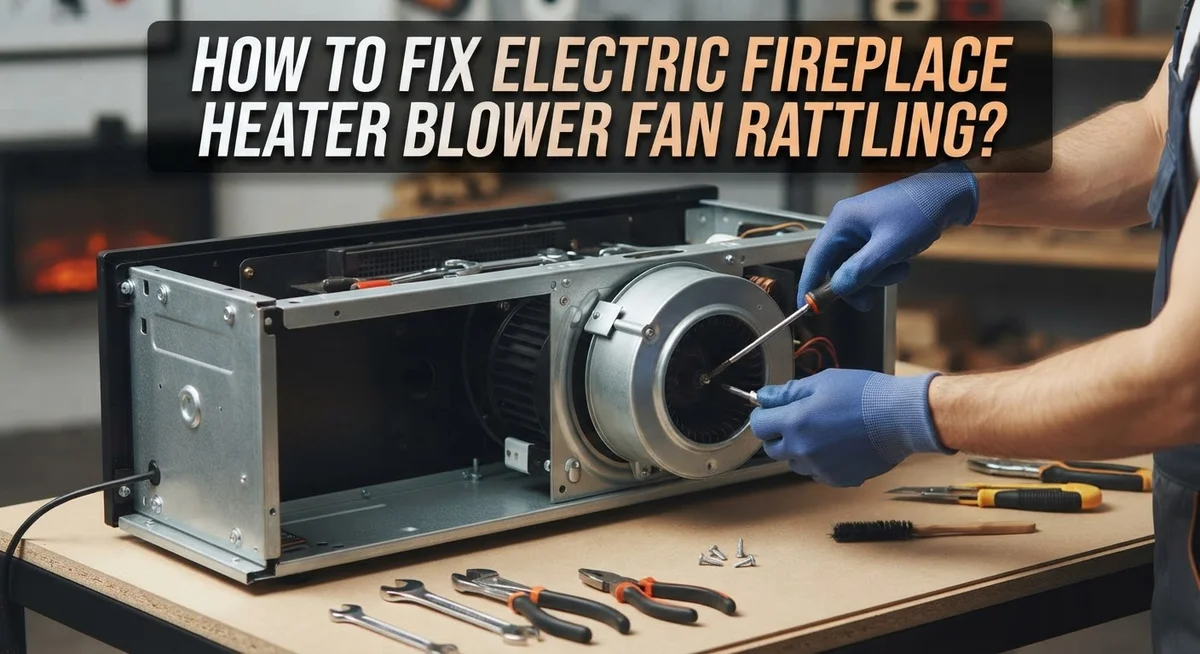
Next, locate the blower assembly. Most electric fireplaces have the blower unit mounted near the back or bottom of the unit. Check your manual for the exact location. Remove the blower assembly carefully by unbolting it from the fireplace frame.
Once removed, hold the fan blade and try to move it by hand. A healthy fan blade should have minimal play. If it moves excessively, this indicates loose components or worn bearings. Spin the blade gently and listen for grinding sounds. Grinding means internal damage.
Inspect the motor housing for visible debris. Look for dust, pet hair, or lint accumulation around the fan blade and inside the housing. Use a flashlight to see into dark corners. Debris is a common culprit behind rattling sounds.
Check all screws on the fan assembly and motor housing. Use your fingers or a screwdriver to test each screw for tightness. Loose screws vibrate during operation and create rattling noises. Tighten any loose fasteners you find.
Examine the fan housing clips that hold the blower assembly in place. These clips should grip the assembly firmly without gaps. If clips are bent or damaged, they allow movement and vibration.
Look at the rubber or foam padding around the motor. This material dampens vibration. If padding appears compressed or missing, it won’t absorb vibration effectively.
Take photos of everything before reassembling. This helps you remember proper placement. Now you have a clear picture of what’s causing the rattle and what needs attention next.
How to Fix a Loose or Vibrating Fan Assembly
A loose or vibrating fan assembly is one of the easiest problems to fix yourself. The good news is that you can often resolve it without professional help.
Start by checking all the screws that hold your fan assembly together. Use the appropriate wrench or screwdriver to tighten every screw you find. Pay special attention to the screws connecting the fan blades to the motor shaft. Even slightly loose screws can create a noticeable rattle during operation.
Next, inspect the fan housing clips. These clips hold the blower assembly in place within your fireplace unit. Make sure each clip sits firmly and securely. If a clip is bent or damaged, the entire assembly can vibrate against the fireplace frame.
Check the rubber or foam padding around the motor. This material absorbs vibration and prevents the motor from touching metal surfaces. If the padding is worn, compressed, or missing, vibration transfers directly to your fireplace structure, creating rattling sounds.
Look at how your fireplace sits on the floor or mounting surface. An unbalanced unit will vibrate more easily. Place your hand on different parts of the fireplace while it runs. If you feel excessive vibration in one area, that’s your problem spot.
Clean any dust or debris from inside the motor housing and fan assembly. Dirt buildup can cause imbalance and increase vibration. Use a soft brush or cloth to gently remove particles.
After tightening and cleaning, reassemble everything carefully. Make sure the blower assembly clicks or snaps into place properly. Plug in your fireplace and test it. The rattling should be gone or significantly reduced.
Cleaning and Resetting the Motor Housing
Start by unplugging your electric fireplace from the wall. Wait 10 to 15 minutes before touching any internal components. This allows the motor to cool and the electrical charge to drain completely.
Locate the blower assembly housing. Most electric fireplaces have this mounted near the heating element. Remove it carefully by unscrewing the fasteners that hold it in place. Set all screws in a small container so you don’t lose them.
Once removed, inspect the motor housing for dust and debris buildup. Lint, pet hair, and dust accumulate inside over time and cause vibrations. Use a dry cloth or soft brush to gently wipe away any particles you see. Be careful not to damage any internal wiring or components.
Check the motor bearings for dirt or obstructions. The bearings are small cylindrical parts that allow the fan to spin smoothly. If they appear clogged, carefully clean around them with a dry cloth.
Look at all connection points where the motor housing meets the fan assembly. Tighten any loose fasteners you find using the appropriate wrench or screwdriver. Even slightly loose connections create rattling sounds during operation.
After cleaning and tightening, reassemble the blower assembly. Make sure all clips and fasteners are secure and properly seated. The housing should fit snugly without gaps or movement.
Plug the fireplace back in and turn on the blower fan. Listen carefully for any remaining noise. If the rattle persists, the issue may involve bearing wear or unbalanced components that require further attention.
This cleaning and resetting process resolves most rattling problems caused by debris and loose connections.
Preventing Rattling Noises From Returning
Preventing rattling noises from returning requires consistent maintenance and smart placement habits. The good news is that most rattle problems stem from vibration rather than serious motor damage, so prevention is straightforward.
Start by checking your fireplace placement. Make sure it sits flat on a level surface. Uneven floors cause vibration that travels through the unit. If your floor slopes slightly, use rubber slabs or shims under the legs to level everything out. This single step stops many rattle issues before they start.
Dust buildup inside the motor housing is a major culprit. Plan to inspect your blower assembly every few months. Unplug the fireplace and remove the blower assembly carefully. Use a soft cloth or brush to clean out accumulated dust from the motor housing and fan blades. Debris restricts movement and creates vibration.
Check all screws on your fan assembly regularly. Vibration naturally loosens fasteners over time. Spend a few minutes every season tightening any loose screws you find. This prevents small problems from becoming big ones.
Make sure the fan housing clips properly into place each time you reassemble the unit. Improper seating causes constant vibration. Verify that all connection points fit snugly before plugging the fireplace back in.
Keep the area around your fireplace clear of obstacles. Anything touching the unit during operation can transfer vibration and create rattling sounds.
Finally, avoid using your fireplace continuously for extended periods. Give the motor regular breaks. This reduces wear on bearings and keeps components functioning smoothly for years to come. Simple preventive care stops rattling from returning.
Common Mistakes to Avoid When Repairing the Blower Fan
Many people rush through blower fan repairs and make costly mistakes. Understanding what to avoid saves you time and prevents further damage to your fireplace.
Never skip the unplugging step. This is the most critical safety mistake. Always disconnect your electric fireplace from the wall outlet before touching any internal parts. Working on a plugged in unit risks electric shock or accidental activation.
Ignoring loose screws is another common error. People assume rattling comes from the motor itself and overlook simple fixes. Check every screw on the fan assembly and motor housing carefully. Tightness matters more than you think.
Don’t forget to inspect how the fan housing clips into place. Many people reassemble everything without verifying proper alignment. Misaligned housing causes vibration against the fireplace frame, which creates rattling sounds. Take your time during reassembly.
Overlooking debris buildup inside the motor housing is a frequent mistake. Dust accumulation restricts movement and causes vibrations. Clean thoroughly before reassembling any parts.
Avoid forcing components together during reassembly. If something doesn’t fit smoothly, stop and check alignment. Forcing parts can damage clips or housing permanently.
Don’t assume your motor is failing when rattling occurs. Most rattling problems stem from vibration issues, not motor damage. Structural adjustments and tightening usually resolve the noise completely.
Finally, skip the temptation to apply excessive lubricants. A small amount of lubricant on bearings helps, but too much attracts dust and worsens problems.
Take photos before disassembling anything. Reference photos prevent reassembly mistakes and help you remember where each component belongs. Patience during repairs prevents expensive replacements later.
When to Consider Professional Repair or Replacement
Most rattling problems resolve with simple fixes like tightening screws or removing debris. However, some situations call for professional help or unit replacement.
Consider professional repair if you’ve tried basic troubleshooting without success. A technician can diagnose issues you might miss, like worn motor bearings or internal component damage. They have specialized tools to safely disassemble and inspect your fireplace.
If your fireplace is still under warranty, professional repair makes financial sense. Warranty coverage often includes labor costs, so you pay nothing out of pocket. Contact the manufacturer first to confirm what their warranty covers.
Replace your fireplace if repairs cost more than half the original price. Older units with multiple issues may not be worth fixing. A new fireplace costs less in the long run than repeated repairs.
Watch for these warning signs that indicate replacement is better. If the motor makes grinding sounds instead of just rattling, internal damage likely exists. When the blower fan doesn’t turn on at all, the motor may be beyond repair. If your unit is over 10 years old and develops new problems frequently, replacement is smarter.
Professional technicians can also assess whether your fireplace is safe to use. Electrical issues inside the motor housing pose fire hazards. They’ll determine if continued use risks your home’s safety.
Get a repair estimate before deciding. Ask the technician what caused the rattling and whether similar problems might develop. This information helps you choose between fixing and replacing your unit wisely.
Final Thoughts
Fixing a rattling blower fan is easier than most people think. In most cases, the noise comes from vibration, not motor failure. A few simple checks can save you time and money.
Start by unplugging your fireplace before doing anything else. Then look for loose screws, dirt buildup, or a fan housing that isn’t seated correctly. These three issues cause most rattling problems.
Tightening screws and cleaning debris often solves the issue right away. If vibration continues, try placing rubber slabs under the unit’s legs. This small change absorbs movement and stops the rattling sound.
Balancing your fireplace also makes a big difference. An uneven unit shakes more, and that shaking turns into noise over time. Take a few minutes to check that your fireplace sits level on the floor.
Remember that patience matters during this process. Rushing through repairs can cause more harm than good. Take your time when removing the blower assembly and inspecting each part.
If you’ve tried these steps and the rattling continues, don’t panic. Sometimes deeper mechanical issues need a professional’s attention. A technician can pinpoint problems that aren’t visible during a basic inspection.
Regular maintenance keeps rattling from coming back. Clean your fireplace often and check for loose parts every few months. This simple habit extends the life of your unit.
Overall, most blower fan rattling issues have simple fixes. With basic tools and a careful approach, you can restore quiet operation. Your fireplace will run smoothly again once the root cause is addressed.
A little care today prevents bigger headaches tomorrow.
Frequently Asked Questions
Why is my electric fireplace blower fan making a rattling noise?
Rattling usually comes from vibration, not motor failure. Loose fan blades, worn bearings, or debris inside the motor housing cause most rattling sounds. The fan assembly may also vibrate against the fireplace structure itself.
Unbalanced units frequently produce rattling too. Sometimes the fan housing doesn’t seat properly in its clips. This misalignment creates movement during operation.
Can I fix the rattling myself without calling a technician?
Yes, most rattling problems have simple fixes. Start by unplugging your fireplace completely for safety. Then remove the blower assembly and inspect it closely.
Look for visible dirt, dust, or loose screws. Tighten any loose fasteners on the fan assembly. Clean debris from the motor housing with a soft brush or cloth.
Check that the fan housing clips correctly into place. Reposition your fireplace if it vibrates against nearby surfaces. These steps solve the problem in many cases.
What should I do if the rattling continues after basic cleaning?
Try balancing your fireplace on a level surface. Place rubber slabs or pads under the legs to reduce vibration transfer. This simple adjustment often eliminates rattling.
You can also apply a lubricant to reduce friction between moving parts. Ensure all connections are tight and secure before plugging the unit back in.
If rattling persists after these efforts, professional repair may be necessary.
How can I prevent rattling from happening again?
Regular maintenance stops problems before they start. Dust your fireplace monthly to prevent debris buildup. Check screws and fasteners every few months.
Keep your fireplace on a stable, level surface. Avoid placing it where it contacts walls or furniture. These preventive steps keep your blower fan running smoothly.

Hi, I’m Rue Hessel, the founder and voice behind TheGenTool. I’m a passionate tech enthusiast who loves exploring the latest gadgets, smart devices, and electronics that shape our everyday lives. Through my website, I share honest, hands-on reviews of trending Amazon products to help you make smarter and more confident buying decisions.