How To Fix Smart Blinds Tension Motor Spring Uncoiling?
Smart blinds make life easier. But when the tension motor spring starts uncoiling, that convenience disappears fast.
Your blinds might rise unevenly. They could stop responding altogether. Or the shade may feel loose and wobbly instead of snapping back into place.
This problem happens more often than you think. Spring tension issues are common in cordless roller shades, especially motor-driven ones. The good news? You can often fix this yourself without calling a professional.
In a Nutshell
- Check power first. Replace remote batteries and confirm the motor has proper connectivity before touching any springs.
- Do a 60 second reset. Disconnect all power sources and wait a full minute. This fixes many glitches without extra work.
- Adjust tension gradually. Remove the shade, rotate the tube a quarter to half turn in the unwind direction, then rehang it.
- Test after every change. Never make multiple adjustments at once. Small tweaks and constant testing keep you in control.
- Support the shade firmly. The spring holds real energy. Hold the shade steady so it cannot snap back and hurt you.
- Avoid common mistakes. Skipping battery checks, rushing the reset, or making big spring turns usually cause more problems.
Understanding How Tension Springs Work in Smart Blinds
Tension springs in smart blinds work like a battery for mechanical energy. When you pull the shade down, the spring winds up tightly inside the tube. This stored energy helps push the shade back up when the motor activates.
The motor receives signals from your remote or app. It then releases the spring’s stored energy in controlled amounts. This smooth release makes your blinds rise and fall evenly. Without proper tension, the motor struggles to operate the shade correctly.
Why tension matters for your blinds: A properly wound spring provides consistent resistance. The motor can then work against this resistance smoothly. If the spring uncoils too much, it loses its ability to store energy. Your blinds may rise slowly, get stuck, or not respond at all.
The tube itself rotates slightly to adjust tension levels. When you rotate it in one direction, you wind the spring tighter. Rotating it the opposite way lets tension release gradually. This simple rotation is how you fix most tension problems.
Understanding the energy storage system: Your smart blinds contain a mechanical spring that works independently from the motor. The motor doesn’t create all the lifting power. Instead, it works with the spring to move the shade smoothly. Think of the spring as a helper that shares the workload.
Battery power controls the motor, but the spring provides the actual lifting force. This is why a dead battery won’t help, but neither will a broken spring. Both parts must work together properly.
The safety factor: Springs hold real mechanical energy. They can snap back suddenly if not handled carefully. This is why supporting the shade firmly matters during any adjustment. Never rush the process or make large turns at once.
Signs Your Blinds Have a Spring Tension Problem
Your smart blinds will show you clear warning signs before a spring tension problem becomes serious. Recognizing these signals early helps you fix the issue before it gets worse.
Uneven rise is the most obvious sign. One side of your blinds climbs faster than the other. The shade tilts or lags during operation. This happens because the spring tension differs between sides or the motor cannot overcome uneven resistance.
Slow or sluggish movement indicates spring fatigue. Your blinds take longer to open or close than normal. The motor works harder to lift the shade against excessive spring pressure. You might hear the motor strain or notice it stops partway up.
Complete failure to rise means the spring has lost all tension or the motor cannot engage it. You press the remote button, but nothing happens. The shade stays down no matter how many times you try. This often means the spring has fully uncoiled.
Visible sagging or drooping shows the spring no longer supports weight properly. The shade hangs unevenly when lowered. Sections of the blind appear to sag more than others. This creates an untidy look and signals internal spring problems.
Strange grinding or clicking sounds suggest the spring rubs against the tube incorrectly. These noises happen during operation and may get louder over time. The motor struggles to turn the tube smoothly.
The shade won’t stay in position when you stop it halfway. It slowly drops or rises on its own. This means the spring tension cannot hold the shade steady against gravity.
Pay attention to these signs early. Small problems become expensive repairs if ignored. Most tension issues start subtle and worsen gradually. Check your blinds regularly for these warning signals. Early action keeps your smart blinds working smoothly for years.
Before You Start: Power and Battery Checks
Start your troubleshooting by checking the power source. Your smart blinds need electricity to function properly, so battery issues often cause spring tension problems that seem more serious than they really are.
Open your remote control first. Remove the battery compartment cover and inspect the batteries inside. Check if they are corroded, leaking, or completely dead. Replace old batteries with fresh ones of the correct type. Corroded batteries can prevent signals from reaching your motor, making the blinds seem unresponsive even if the spring itself is fine.
Next, verify that your motor has power. Most smart blinds have a small indicator light on the motor unit itself. Look for a red, green, or blue light. If you see no light at all, the motor battery may be dead. Check your motor’s battery compartment separately from your remote batteries. These are often two different power sources.
Test the remote connection by pressing buttons near the motor. Stand close to the blinds and try raising or lowering them. If nothing happens, the remote and motor cannot communicate. Move closer and try again. Sometimes distance or obstacles block the signal.
Now perform a complete power reset. Disconnect all power sources from your blinds system. This includes removing batteries from both the remote and the motor unit. Wait a full 60 seconds without any power running through the system. This time allows electrical charges to fully drain.
After the 60 second wait, reconnect the motor battery first. Then replace the remote batteries. Test the blinds by pressing a button on your remote. A successful reset often fixes tension problems caused by electrical glitches rather than actual spring damage.
Only after confirming power and battery checks should you move forward with spring adjustments. Many people skip this step and waste time on unnecessary repairs.
Step-by-Step Guide to Fixing Tension Motor Spring Uncoiling
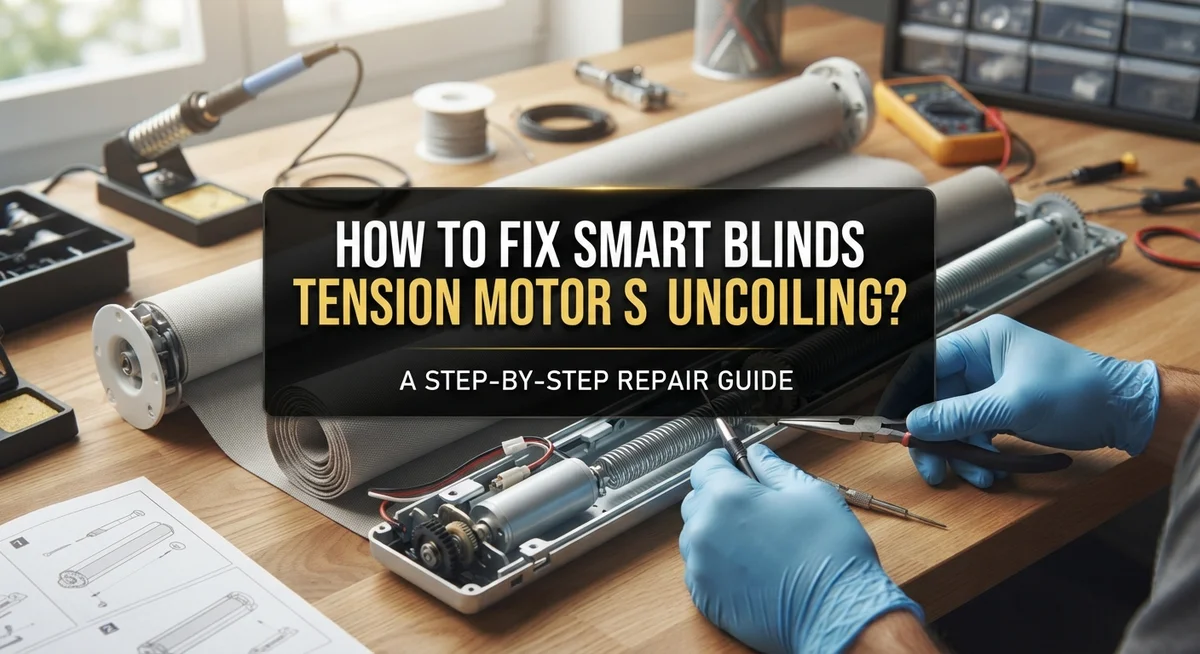
Start by gathering the right tools before you touch the spring mechanism. You’ll need a sturdy ladder, a helper to support the shade, and a Phillips head screwdriver. Wear work gloves to protect your hands from the spring’s stored energy.
Locate the shade tube carefully. Remove your blinds from the window brackets by gently lifting them out. Place the shade on a flat work surface. Never work on blinds while they hang on the wall because the spring can snap back suddenly and cause injury.
Identify the direction you need to rotate. If your blinds rise too slowly or unevenly, you need to increase tension. Rotate the tube clockwise in small quarter turn increments. If your blinds rise too fast or jerk upward, you need to decrease tension. Rotate the tube counterclockwise in the same small movements.
Make one adjustment at a time. Turn the tube only a quarter to half turn. This small change prevents over correction. Rehang the shade back in the window brackets after each adjustment.
Test the blinds thoroughly. Raise and lower them several times to feel how they respond. Watch both sides to ensure even movement. The shade should rise smoothly without jerking or hesitation.
Repeat the process gradually. If the blinds still don’t perform correctly, remove them again and make another small adjustment. Continue this cycle until the movement feels right. Most tension problems require two to four adjustments before reaching the sweet spot.
Keep your helper nearby. Have someone assist you during reinstallation and testing. They can spot uneven movement that you might miss from one angle. This teamwork approach keeps you safer and more accurate throughout the process.
Safety Precautions When Handling Spring Tension
Springs in smart blinds store real mechanical energy. This energy can snap suddenly if you don’t handle it correctly. Your safety depends on following these precautions before you touch anything.
Always disconnect power completely before starting work. Remove the battery from your remote control. Unplug the motor from its power source if it has a plug. Wait a full 60 seconds to let any stored electrical charge drain away. This simple step prevents accidental motor engagement while you work.
Wear safety glasses when handling the shade tube. A spring under tension can release suddenly. Your eyes need protection from any snapping motion. Gloves also help you grip the tube firmly without slipping.
Support the shade firmly with both hands at all times. Never let it hang loose or rest on just one support point. An unsupported shade can drop suddenly or twist unexpectedly. Have a second person help you if possible. One person holds the shade steady while the other makes adjustments.
Never force the tube to rotate. If it feels stuck, stop immediately. Forcing it can damage the spring or cause it to unwind violently. Let the mechanism rest and try again with gentle pressure.
Keep your face and body away from the tube. Stand to the side, not directly underneath. If the spring releases suddenly, you don’t want it snapping toward your face or chest.
Work in a clear space with good lighting. Remove clutter from your work area. You need room to maneuver safely. Good lighting helps you see exactly what you’re doing.
Never adjust the spring when the blinds are still hanging in the window. Always remove them first. This prevents the shade from falling if something goes wrong.
These precautions take just minutes but protect you from serious injury.
Common Mistakes to Avoid During Tension Adjustment
Making mistakes during tension adjustment can damage your motor or make the problem worse. Here are the errors you should avoid.
Rushing through adjustments is the biggest mistake people make. Your blinds need time to settle after each change. If you turn the tube too much at once, you won’t know which adjustment actually fixed the issue. Always rotate only a quarter to half turn, then test. Wait at least 30 seconds between attempts so the spring can stabilize.
Skipping the power reset before spring work causes confusion. Your motor might respond slowly or oddly if it hasn’t fully reset. Always disconnect the battery and wait the full 60 seconds. This clears any stuck signals in the system. Then reconnect and test the remote before you touch the spring.
Not supporting the shade properly during adjustment is dangerous. Springs store real energy. If you hold the tube loosely or let it rest on one bracket, it can snap back suddenly and pinch your fingers. Always grip the tube firmly with both hands and keep your face away from it.
Forgetting to test between adjustments means you might over correct. Remove the blinds, make one small turn, rehang them, and raise and lower them several times. Notice how they feel. Does the rise seem smoother? Do they stop evenly? This feedback tells you if you need another adjustment or if you’re done.
Don’t force a stuck tube. If it resists rotation, stop immediately. Forcing it can break the spring mechanism or strip the connector. Instead, disconnect the battery again, wait, and try once more with gentle pressure.
Finally, avoid working in poor light or cluttered spaces. You need clear visibility and room to move safely. Take your time, stay patient, and make small changes.
Troubleshooting Persistent Spring or Motor Issues
When your smart blinds spring keeps uncoiling or the motor won’t respond properly, the issue usually stems from power, battery, or spring tension problems. Let’s walk through the troubleshooting steps that actually work.
Start by checking your remote control batteries. Dead or weak batteries are the number one reason blinds stop working. Replace them with fresh ones and test your blinds immediately. If nothing changes, move to the next step.
Perform a complete power reset. Disconnect your blinds from all power sources for at least 60 seconds. This clears any software glitches that might confuse the motor. Reconnect everything and test again.
If your blinds still won’t move smoothly, the spring tension likely needs adjustment. Remove the blinds carefully from the window brackets. Locate the shade tube and rotate it slowly in the unwind direction. Make only a quarter to half turn at a time.
Rehang the blinds and test them thoroughly. Raise and lower them several times to check the response. If tension remains off, remove them again and repeat with another small adjustment. Never make large turns at once. This causes over correction and damages the motor mechanism.
Pay close attention to how the blinds feel during operation. They should rise smoothly without jerking or hesitation. They should also lower gradually without dropping suddenly. These signs tell you whether tension is correct.
If problems persist after multiple small adjustments, the motor itself might be failing. Check for visible damage inside the tube or unusual sounds during operation. Sometimes a motor simply reaches the end of its lifespan and needs replacement through proper channels.
Always support the shade firmly during any spring work. Springs store real energy and can snap back suddenly. Keep your face and body away from the tube. Work in good lighting with a clear space around you.
Final Thoughts
Fixing a smart blinds tension motor spring is a task you can handle with patience. Small, careful steps make all the difference between success and frustration.
Remember the basics. Check your batteries first. Then try a full power reset before touching the spring itself.
If the tension still feels off, focus on quarter turn adjustments. These tiny movements protect your motor and your safety.
Never rush this process. Springs hold real energy, and quick fixes often cause bigger problems later.
Testing after each adjustment saves you time. It also helps you understand exactly how your blinds respond to changes.
Most tension problems get solved through this simple cycle. Reset power, adjust the tube slightly, then test the movement. Repeat until the shade rises and falls smoothly.
Some situations need more attention. If your blinds still struggle after several careful adjustments, the motor might have a deeper issue.
In that case, contacting a professional makes sense. Motor problems differ from spring tension problems, and forcing repairs can damage your unit further.
Keep safety as your top priority throughout this process. Support the shade firmly. Stand to the side, not underneath it. Work in good lighting with a clear space around you.
These precautions matter just as much as the technical steps. A calm, careful approach prevents injury and protects your equipment.
Smart blinds are convenient once they work properly again. Taking time now to fix the spring tension correctly saves you from repeated headaches later.
Most homeowners find this fix straightforward once they understand the pattern. Check power, adjust gradually, test often, and support the shade properly.
Your blinds should return to smooth, quiet operation with these steps. If not, professional help ensures your smart blinds work safely and reliably for years to come.
Trust the process, stay patient, and your blinds will thank you.
Frequently Asked Questions
Why does my smart blind motor stop responding to the remote?
Your remote batteries likely need replacement. Check the battery compartment first and swap in fresh batteries. If the blinds still don’t move, perform a 60 second power reset. Disconnect the shade from power completely, wait a full minute, then reconnect. This clears any system errors that block motor response.
What does it mean when the spring keeps uncoiling?
The spring tension has become too loose. This happens over time as the mechanism wears. Your shade won’t roll up smoothly or hold its position. The motor works harder to compensate. You’ll notice the blinds feel slack or droopy when you try to raise them.
How do I adjust the spring tension myself?
Remove the shade from its brackets. Locate the tube at the top. Rotate it slowly in the unwind direction by one quarter to one half turn. Rehang the blinds and test how they feel. Make small adjustments only. Test between each turn. Repeat this cycle until the tension feels right and your shade rises evenly.
Is adjusting the spring tension dangerous?
Yes, springs store mechanical energy. Always support the shade firmly with both hands before making any adjustments. Never let it hang loosely during work. Keep your hands clear of moving parts. Wear safety glasses if possible. The spring can snap back suddenly if not handled carefully. Take your time and stay focused on the task.
When should I call a professional instead?
If the motor still won’t respond after battery replacement and power reset, a professional can help. If the spring keeps uncoiling even after multiple adjustments, the motor may be failing. Professionals have tools to diagnose internal motor problems safely.

Hi, I’m Rue Hessel, the founder and voice behind TheGenTool. I’m a passionate tech enthusiast who loves exploring the latest gadgets, smart devices, and electronics that shape our everyday lives. Through my website, I share honest, hands-on reviews of trending Amazon products to help you make smarter and more confident buying decisions.