How To Fix Electric Meat Grinder Auger Binding?
Your electric meat grinder suddenly stops turning. Meat gets stuck. The auger just won’t move.
This problem is called auger binding. It happens when the screw inside your grinder gets jammed or blocked.
Many things can cause this issue. Your motor might be overheating. Debris could be stuck in the blade slot. The shaft itself might be misaligned or damaged.
The good news? You can often fix this problem at home. You don’t need to be an expert to solve it.
This guide walks you through simple steps to get your grinder working again. We will show you how to check for debris and misalignment. You will learn how to inspect your blade and retaining ring too.
We also cover common mistakes that make binding worse. Restarting a hot grinder is one big error many people make.
Finally, we share prevention tips to stop this problem before it starts. Simple habits like chilling meat first can save you time later.
By the end, you will know exactly how to clear a jam and keep your grinder running smoothly.
In a Nutshell
Here’s a quick summary to help you fix auger binding fast.
-
Let it cool first. If your grinder feels hot, turn it off and wait. Restarting a hot motor can cause more damage.
-
Check for debris. Look inside the auger shaft and blade slot. Small bone bits or tough gristle often cause the jam.
-
Tighten loose parts. A loose retaining ring or screw can make the blade wobble. This stops the auger from turning smoothly.
-
Inspect the gasket. A worn or damaged gasket can throw off the alignment. Replace it if you spot cracks or gaps.
-
Add lubrication. Moving parts need a light coat of food safe grease. This keeps the auger turning without strain.
-
Prep your meat properly. Chill your meat and cut it into small pieces first. This simple step prevents most binding problems.
Follow these steps in order. You will likely find the fix within minutes. Most binding issues come from heat, debris, or loose parts, not motor failure.
What Causes Auger Binding in Electric Meat Grinders
Auger binding happens when the spiral shaft inside your grinder stops spinning. This jam prevents meat from moving through the machine and can damage internal parts if you keep forcing it.
Meat quality matters most. Fatty or stringy meat wraps around the auger blade and creates blockages. Connective tissue gets caught on the rotating shaft. Bones or hard cartilage can wedge between the auger and the grinding plate, stopping everything cold.
Temperature causes real problems. Warm meat is softer and stickier. It clings to metal surfaces instead of grinding smoothly. The heat from grinding friction also makes meat pack tighter around the auger shaft.
Debris buildup happens gradually. Old meat bits stuck inside the grinder accumulate over time. Dried particles lodge in tight spaces. This buildup narrows the grinding chamber and increases friction on the auger.
Mechanical issues create binding too. A loose retaining ring lets the blade shift out of position. Misaligned parts rub against each other and jam up. Worn gaskets allow components to move where they shouldn’t.
Electrical problems cause binding indirectly. A failing motor switch cuts power suddenly while meat is in the chamber. The auger stops mid rotation with meat packed around it. Faulty wiring prevents the motor from delivering steady power.
Lubrication affects movement. Dry moving parts create extra friction and resistance. The motor has to work harder to turn the auger. This strain can cause the motor to stall completely.
Understanding these causes helps you prevent binding before it starts. You’ll know what to check first when problems occur.
Signs Your Grinder Auger Is Binding
Your electric meat grinder shows clear warning signs when the auger starts binding. Recognizing these signals helps you stop problems early before serious damage occurs.
Listen for unusual sounds first. A grinding or squealing noise means something blocks the auger shaft. Normal operation should be quiet or produce only a soft hum. If your grinder makes loud grinding sounds, turn it off immediately and investigate.
Feel the motor resistance. When you turn on the grinder, the motor should spin smoothly. Binding creates heavy resistance that feels wrong. The motor may struggle, stall, or shut off on its own. Some grinders have safety features that stop the motor when pressure gets too high.
Watch for meat backup. Meat should flow through the grinder consistently. When the auger binds, meat piles up inside the grinding chamber. You may see meat backing up toward the hopper or leaking from the sides. This blockage means the auger cannot push meat forward.
Check for heat buildup. A binding auger causes the motor to work harder, creating excess heat. The grinder body feels hot to the touch. You may smell burning plastic or rubber if the motor overheats.
Notice reduced output. A binding auger grinds meat slowly or stops completely. You should get steady ground meat from the discharge tube. Little or no meat coming out signals a serious jam inside.
Observe motor behavior. The motor may make clicking sounds or cut on and off repeatedly. This happens when the motor tries to push through resistance but cannot. Some grinders shut down automatically to protect the motor from damage.
These signs mean your auger needs attention right away.
Step-by-Step: How to Fix a Binding Auger
Start by turning off your grinder completely. Never work on a binding auger while the machine runs. Unplug it from the power source for safety.
Wait at least 15 to 20 minutes for the grinder to cool down fully. A hot motor can cause burns and hide problems. Once cool, plug it back in and test it again. Sometimes cooling alone fixes temporary binding caused by heat expansion.
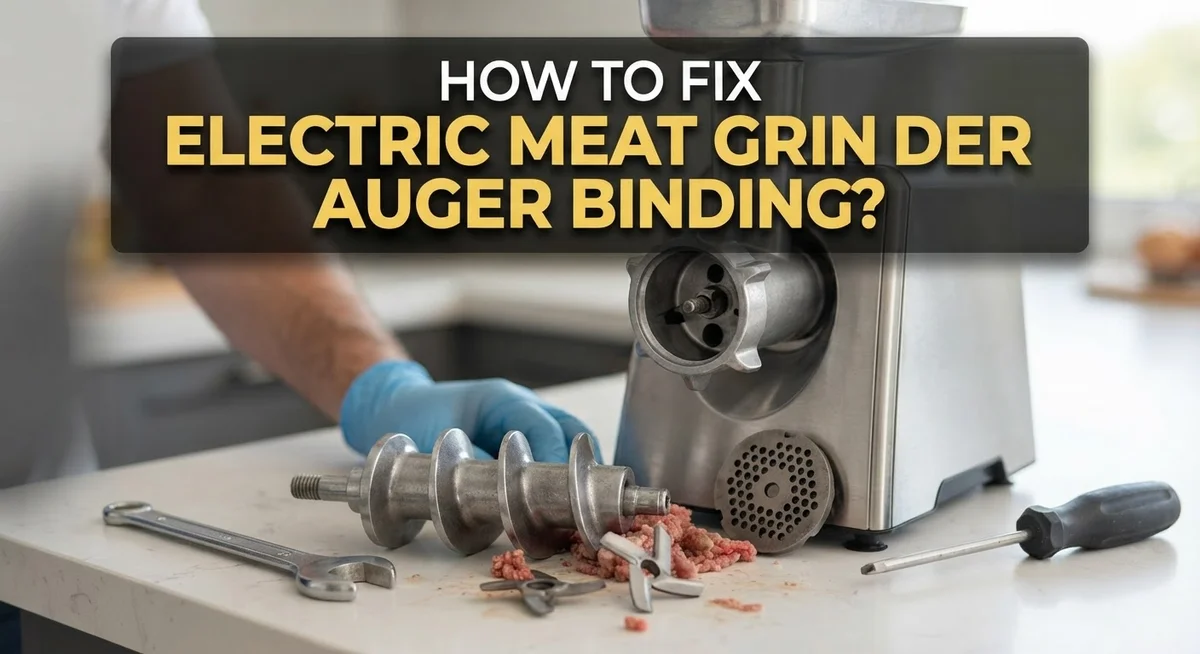
If binding continues, disassemble the front section carefully. Remove the blade assembly and auger shaft according to your grinder’s manual. Look closely at the auger spiral for stuck meat, fat, or bone fragments. Use a soft brush or cloth to clean away debris gently.
Inspect the blade slot where the auger rotates. Any misalignment here prevents smooth spinning. Check that the shaft sits straight and centered. A bent shaft needs replacement, as straightening it rarely works long term.
Examine the retaining ring or screw holding the blade in place. Tighten it firmly but do not over tighten, which can crack parts. If the ring spins freely without holding the blade, replace it.
Look at the gasket between the blade and housing. A compressed or damaged gasket throws off alignment and causes binding. Replace worn gaskets with new ones matching your grinder model.
Apply a thin layer of food safe lubricant to the auger shaft and blade assembly. Moving parts need light lubrication to spin freely. Avoid over lubricating, which attracts debris.
Reassemble all parts in reverse order. Start your grinder without meat first. Listen for smooth operation and watch for any unusual sounds. Run it for one minute to confirm everything works properly before grinding meat again.
Cooling Down and Restarting Safely
After you fix your grinder’s auger binding, cooling down and restarting safely matters greatly. Never rush this process or you risk damaging the motor further.
Allow the grinder to cool completely before turning it back on. Your motor needs at least 15 to 20 minutes of rest after binding occurs. The internal components heat up significantly when the auger stops rotating. Restarting a hot grinder puts extra stress on the motor windings and can cause permanent damage.
Check the temperature by carefully touching the grinder housing. It should feel cool to the touch before you proceed. If steam rises or the metal feels hot, wait longer.
Before restarting, verify your repairs worked correctly. Manually rotate the auger by hand to ensure it spins freely. The shaft should turn without resistance or grinding sounds. If it still feels stuck, stop immediately and inspect again for debris or misalignment.
When you restart the grinder, do so without any meat inside. Run it empty for 30 seconds to confirm smooth operation. Listen for normal motor sounds and watch that the auger rotates steadily.
Once the grinder runs smoothly without load, you can resume grinding meat. Start with a small batch first. This approach lets you catch any remaining issues before processing large quantities.
If binding returns after cooling and restarting, electrical problems may exist. Faulty switches or damaged wires can cause the auger to jam repeatedly. In this case, stop using the grinder and inspect the electrical components or seek professional service.
Cleaning, Lubricating, and Realigning Auger Components
Cleaning your grinder thoroughly removes debris that causes auger binding. Start by unplugging the unit and letting it cool completely. Use a soft brush or cloth to wipe away meat particles from the auger shaft and blade assembly. Pay special attention to the spaces where the auger meets the housing, as trapped meat hardens quickly.
Lubrication prevents friction that locks the auger in place. Apply food safe lubricant sparingly to the auger shaft and moving joints. Use only a thin layer to avoid attracting dirt and debris. Wipe away excess lubricant with a clean cloth. Proper lubrication reduces resistance and helps the auger rotate smoothly.
Realigning auger components ensures everything works together correctly. Check that the auger shaft sits centered in its housing. Look at the blade slot to confirm it aligns properly with the shaft. A misaligned auger catches and binds during operation.
Inspect the retaining ring or screw that holds the blade firmly in place. Tighten it if loose, but avoid over tightening which can crack components. Check the gasket between the blade and housing for cracks or deterioration. A damaged gasket allows the blade to shift and bind.
After cleaning, lubricating, and realigning, manually rotate the auger by hand. It should turn freely without resistance or grinding sounds. If rotation feels stiff or uneven, repeat your inspection steps. Test the grinder without meat first to confirm smooth operation.
Regular maintenance prevents most auger binding problems. Clean your grinder immediately after each use while meat particles remain soft and easy to remove. This simple habit keeps your equipment working reliably for years.
Preventing Future Auger Binding Issues
Preventing future auger binding issues keeps your electric meat grinder running smoothly for years. The best approach starts with proper meat preparation before each use.
Always trim excess fat and remove all bones from your meat. Bones jam the auger quickly and cause serious damage. Cut meat into pieces that match your grinder’s capacity. Most grinders work best with cubes roughly one to two inches in size. Smaller pieces feed more smoothly through the system.
Temperature matters significantly. Chill your meat in the freezer for 30 minutes before grinding. Cold meat is firmer and feeds more consistently. It also produces better texture in your final ground product. Warm meat becomes mushy and clogs the auger more easily.
Load meat gradually into the hopper. Never force large chunks down or overstuff the opening. Let gravity do the work. Your grinder’s auger moves at a set speed, so pushing too much meat overwhelms the system.
Inspect your grinder after each use. Remove any meat particles stuck in the blade slot or auger housing. Dried meat becomes rock hard and binds the auger on your next use. A quick rinse and dry prevents buildup.
Store your grinder in a cool, dry place. Moisture causes rust on metal parts, which increases friction and binding. Keep the auger assembly lightly lubricated during storage with food safe oil.
Check electrical connections regularly. Loose wires or faulty switches cause inconsistent motor performance. A motor that hesitates or stutters puts extra strain on the auger. Replace worn switches before they cause problems.
These prevention steps reduce binding issues dramatically and extend your grinder’s lifespan significantly.
Common Mistakes to Avoid When Fixing Auger Binding
When fixing auger binding, several mistakes can make the problem worse or create new issues. Understanding what to avoid saves you time and protects your grinder.
Never force the auger to rotate by hand. If it feels stuck, applying excessive pressure can damage the shaft or strip internal gears. Gentle testing tells you if something is truly blocked. If resistance feels extreme, stop immediately and investigate the cause.
Skipping the electrical inspection is a common error. Many people assume binding is only mechanical when faulty switches or damaged wires actually prevent proper motor function. Electrical failures can cause the motor to stall, which feels like binding. Always check your power connections and switch operation before assuming mechanical problems exist.
Avoid reassembling parts too quickly. Rush jobs lead to misaligned components that bind again within minutes. Take time to verify each part sits correctly before tightening retaining rings or screws. Double check that the blade slot aligns properly with the auger shaft.
Don’t ignore gasket condition during repairs. Worn or damaged gaskets allow meat particles to enter spaces where they shouldn’t be, causing binding. Replace any gasket that looks compressed, cracked, or deteriorated.
Restarting with meat still inside the grinder is another mistake. After fixing binding issues, always run your grinder empty first. This confirms the auger rotates freely without resistance. Only add meat once you verify smooth operation.
Finally, using incorrect lubricants causes problems. Food safe lubricants work best for meat grinders. Regular oils can attract debris and create sticky residue that binds the auger. Always use appropriate lubricants designed for food equipment.
Troubleshooting Persistent or Recurring Binding Problems
When your electric meat grinder keeps binding even after you’ve cleaned and lubricated it, you’re dealing with a persistent problem. Recurring binding usually points to deeper mechanical or electrical issues that simple maintenance won’t solve.
Start by testing the grinder without any meat inside. Plug it in and run it for a few seconds. If the auger still binds or moves slowly, the problem isn’t your meat preparation. It’s something internal.
Check the auger shaft carefully for bent or warped sections. A damaged shaft won’t rotate smoothly no matter how much you clean it. Inspect the blade slot where the grinding blade sits. Debris can hide deep inside this area and cause repeated jamming.
Electrical components often cause persistent binding problems. The motor switch might be failing, sending inconsistent power to the motor. Damaged wires can reduce power flow, making the motor too weak to push the auger through resistance. Have an electrician test these components if you’re not comfortable doing it yourself.
The gasket seal between the grinding head and body deserves attention too. A worn gasket allows meat juice to seep into mechanical parts, causing corrosion and binding. Replace any gasket that looks compressed or damaged.
If binding returns within minutes of restarting, write down exactly when it happens. Does it occur immediately? After grinding for thirty seconds? This timing helps identify whether you’re facing a mechanical jam or an electrical issue.
Consider whether your grinder might be underpowered for the meat type you’re grinding. Tougher cuts require more motor strength. If everything checks out mechanically and electrically, your grinder may need professional repair or replacement.
Final Thoughts
Fixing auger binding does not have to feel like a big challenge. Most problems come from simple causes. Overheating, debris, and misalignment top the list.
Cooling your grinder down fixes many binding issues right away. Give it time before you restart. This one step saves you from bigger repairs later.
Checking the auger shaft and blade slot matters a lot. Small bits of gristle or bone often cause blockages. A quick inspection catches these problems early.
Loose screws and worn retaining rings also cause binding. Tighten these parts often. Replace them when they show wear.
Gaskets play a bigger role than most people think. A damaged gasket lets meat slip into places it should not go. Check yours regularly and swap it out when needed.
Lubrication keeps everything moving smoothly. Apply the right lubricant to moving parts after cleaning. This step reduces friction and stops future jams.
Your electric meat grinder works hard every time you use it. Treating it well pays off with fewer breakdowns. A little care goes a long way.
Remember that prevention beats repair every single time. Trim your meat well and chill it before grinding. Feed it into the hopper at a steady pace.
If binding keeps happening, do not ignore it. Persistent problems point to deeper issues like motor trouble or electrical faults. Catching these early saves your grinder from bigger damage.
With the right approach, you can fix most binding problems yourself. Stay patient and work through each step. Your grinder will thank you with smooth, reliable performance for years to come.
Frequently Asked Questions
Why does my electric meat grinder auger keep binding after I clean it?
Binding often returns because the root cause wasn’t fully addressed. The auger shaft might be bent or warped, which cleaning alone won’t fix. Electrical components like the motor switch can fail and send inconsistent power, causing the auger to stick mid rotation.
Check the gasket seal between the grinding head and body. A worn gasket allows meat juice to seep into the motor area, creating friction. Also inspect the retaining ring or screw that holds the blade in place. If it’s loose, the blade shifts and binds against the auger shaft.
Test your grinder without any meat first. This tells you if the problem is mechanical or related to the meat type you’re using.
Can I restart my meat grinder immediately after it stops binding?
No. Allow the grinder to cool completely before restarting. Heat buildup causes metal parts to expand, which increases friction and binding.
Wait at least 15 to 20 minutes before trying again. Restarting while hot forces the motor to work harder and can damage internal components. Remove any meat still inside the grinder during this cooling period.
What should I lubricate on an electric meat grinder?
Focus on the auger shaft and the blade slot area. Use a food safe lubricant designed for kitchen equipment. Apply it sparingly to moving parts only.
Never over lubricate. Excess lubricant attracts meat particles and debris, which then cause clogs. Wipe away any drips before reassembling.
How do I know if my auger shaft is damaged?
Spin the auger by hand gently after unplugging the grinder. A bent or warped shaft feels rough or catches at certain points. You might also notice visible cracks or dents on the shaft surface.
If the shaft is damaged, it must be replaced. Continuing to use a damaged shaft will cause repeated binding and eventually motor failure.

Hi, I’m Rue Hessel, the founder and voice behind TheGenTool. I’m a passionate tech enthusiast who loves exploring the latest gadgets, smart devices, and electronics that shape our everyday lives. Through my website, I share honest, hands-on reviews of trending Amazon products to help you make smarter and more confident buying decisions.