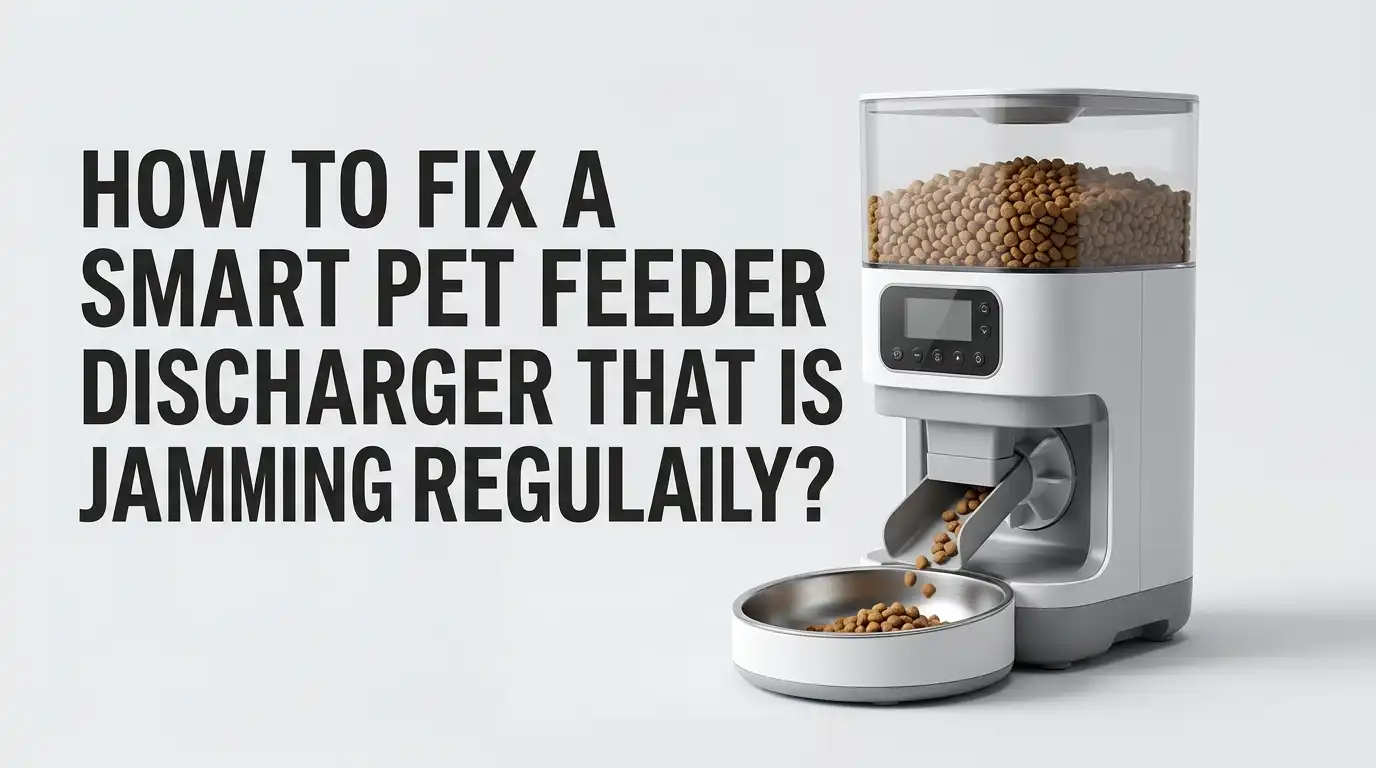
How to Fix a Smart Pet Feeder Discharger That Is Jamming Regularly?
Your smart pet feeder promised peace of mind. Instead, it keeps jamming, and your pet keeps staring at an empty bowl. Frustrating, right?
A discharger that clogs every few days defeats the whole point of automation, especially if you depend on it during work hours or travel.
The good news is that most jams come from a handful of fixable causes. Kibble size, moisture, dirty gears, overfilled hoppers, and worn parts are the usual suspects. You do not need to toss the feeder or call a technician for most issues.
Key Takeaways
- Check kibble size first. Most smart feeders work best with food pieces between 4 mm and 15 mm. Odd shapes, oversized chunks, or crumbled bits are the top cause of jams.
- Moisture is the silent enemy. Humid air softens kibble and makes it stick. A desiccant pack and a dry storage spot can solve recurring blockages.
- Clean the discharger every two weeks. Dust, oil residue, and crumbs build up on the impeller and rotor. A dry brush and a damp cloth fix most stubborn jams.
- Do not overfill the hopper. Filling it to the top puts pressure on the dispensing wheel and forces kibble to bridge. Two thirds full is the sweet spot.
- Inspect moving parts. Worn rubber guards, loose screws, or cracked gears stop the rotor mid spin. Replacement parts are often cheap and easy to swap.
- Use the app smartly. Reset the unit, update firmware, and check error logs. Many feeders report jams through the app before they happen again.
Understand Why Your Smart Pet Feeder Keeps Jamming
A jam happens when food blocks the path between the hopper and the bowl. The discharger uses a rotor, impeller, or auger to push kibble through a narrow chute. Anything that disturbs that flow causes a jam.
The most common causes are oversized kibble, moisture, food dust, broken parts, and overfilled hoppers. Soft or sticky treats mixed with dry food also cause clogs. Some feeders log error codes like “rotor stuck” or “foreign object detected” in the app.
Knowing the cause saves you time. Open the feeder, look inside, and check the kibble shape, the rotor surface, and the chute opening. The clue is usually right there. Once you spot the pattern, the right fix becomes obvious.
Check the Kibble Size and Shape
Kibble size is the number one reason smart feeders jam. Most brands recommend food pieces between 4 mm and 15 mm in diameter. Anything larger gets wedged in the chute. Anything smaller falls through in clumps.
Pour a handful of food on the table and measure a few pieces with a ruler. Round, uniform kibble flows best. Triangular, X shaped, or hollow tube shapes tend to interlock and create bridges in the hopper.
Pros of switching kibble: It is the cheapest fix. You only change the food, not the feeder. Jams often stop within a day.
Cons of switching kibble: Your pet may not like the new brand. Some prescription diets only come in odd shapes, which limits your options. Always change food slowly to avoid stomach upset.
Clean the Dispensing Mechanism Thoroughly
Dust, oil, and crumbs coat the rotor over time. This sticky film grips kibble and stops it from sliding through. A deep clean often solves jams that seem random.
Unplug the feeder, remove all food, and take the hopper apart. Use a dry toothbrush to scrub the impeller, rotor blades, and chute walls. Wipe with a slightly damp microfiber cloth. Never submerge the motor unit in water.
Pay attention to the dispensing hole at the bottom of the wheel. Tiny crumbs love to hide there. Let every part air dry for at least two hours before reassembly.
Pros: Free, fast, and effective. Cons: Needs to be repeated every two weeks. Some feeders have sealed motors that limit access to inner parts.
Reduce Moisture Inside the Hopper
Humid air softens kibble and turns the surface tacky. The pieces then cling to the rotor and to each other. Homes in coastal or tropical areas see this problem most often.
Add a food safe desiccant pack to the hopper lid. Many feeders include a slot for one. Replace it every one to two months, or sooner if it feels heavy. Store your bulk pet food in an airtight container, never an open bag.
You can also place a small dehumidifier nearby if your room stays above 60 percent humidity. Avoid putting the feeder in the kitchen near the stove or sink, where steam builds up.
Dry food stays free flowing. This single change often ends a long history of jams without any other repairs.
Avoid Overfilling the Hopper
It feels smart to fill the hopper to the top before a trip. Sadly, this is one of the biggest causes of jamming. The extra weight presses food down too hard and creates a bridge above the rotor.
Fill the hopper to about two thirds capacity. Give it a gentle shake before setting it down. This breaks any early bridges and helps the food settle evenly.
Pros of underfilling: Smoother dispensing, fewer jams, fresher food because it is replaced more often. Cons: You refill more often, which may not suit long trips.
If you travel for several days, ask a neighbor to top it off rather than packing it tight. Smaller, frequent refills always beat one huge load.
Inspect and Replace Worn Parts
After months of use, rubber guards, gears, and seals wear out. A small crack in the impeller can grab kibble and stall the motor. A loose screw can let the white main gear slip, which is a well known issue on certain models.
Open the dispenser housing and look for shiny spots, hairline cracks, or wobbly pieces. Tighten any loose screws with a small Phillips driver. Check that the rotor spins freely by hand.
Most brands sell replacement gears and seals through their support pages. Keep your model number and serial number handy. Pros: Restores like new performance. Cons: Requires patience and basic tools. Warranty may be voided if you open the motor housing.
Use a Light Lubricant on Sticky Parts
Some users report that a tiny drop of food safe oil on the rubber spinner edges and inside the plastic cover stops repeat jams. The lubricant reduces friction so kibble glides instead of catches.
Use only food grade mineral oil or coconut oil. Never use WD40, machine oil, or cooking sprays, which can contaminate food or attract more dust. Apply with a cotton swab, then wipe off any excess.
This trick works best on feeders with rubber rotor edges that have hardened over time. Pros: Cheap and fast. Often fixes “rotor stuck” errors overnight.
Cons: Temporary fix. You need to reapply every few weeks. Too much oil collects dust and makes the jam worse, so go light.
Reset the Feeder and Update the App Firmware
Software glitches can mimic mechanical jams. The motor may run for a half second and stop, leaving food stuck halfway. A simple reset clears bad signals.
Hold the power button for ten to twenty seconds until you hear a chime. Then reopen the app and check for firmware updates. Manufacturers push fixes for jam detection and motor timing on a regular basis.
Reconnect the feeder to your Wi Fi and run a test dispense. Watch the rotor through the lid to confirm it turns a full cycle.
Pros: Free and takes five minutes. Cons: Will not fix true mechanical problems. If the jam returns within hours, the cause is physical, not digital.
Sort and Sift Your Kibble Before Loading
Broken kibble pieces, dust, and powder collect at the bottom of every food bag. When you pour from the bag straight into the hopper, all that debris jams the rotor.
Use a colander or a wire mesh strainer over a bowl. Pour the kibble in, shake gently, and let the dust fall through. Only the whole pieces go into the feeder.
This step takes about thirty seconds per refill. It removes the single biggest hidden cause of mystery jams. Many pet owners are shocked at how much powder one bag holds.
Pros: Almost free, very effective. Cons: Adds a small step to your routine. You will need to clean the strainer too.
Position the Feeder on a Flat, Stable Surface
A tilted feeder makes kibble pile to one side. The rotor then grabs uneven loads and stalls. Place the unit on a hard, level floor, not on carpet, a rug, or a wobbly mat.
Use a small spirit level if you are unsure. Even a five degree tilt can change how food flows. Make sure all four feet sit firmly on the ground.
Keep the feeder away from walls and corners by at least four inches. This helps airflow and lets you reach the back panel for cleaning.
Pros: Costs nothing. Fixes a surprising number of “random” jams. Cons: Limits where you can place the feeder, which may not match your home layout.
Switch to a Feeder With an Anti Jam Impeller Design
If you have tried every fix and the jams keep coming, the feeder design may be the real issue. Newer models use anti clog impellers, dual rotor systems, and wider chutes. Some run tested cycles of two hundred hours or more without a single jam.
Look for terms like anti jam, conical hopper, or smart sensor reverse. The reverse feature spins the rotor backward when it detects resistance, which clears most blockages on its own.
Pros of upgrading: Long term peace of mind, fewer cleanings, app alerts before food runs out. Cons: Costs more upfront. You may need to retrain your pet to a new bowl height or sound.
Treat this as a last resort after the cheaper fixes fail.
Set Up Jam Alerts and Backup Plans
Even the best feeder can fail. Smart owners build a safety net so their pet never goes hungry. Turn on push notifications in the app for missed meals and low food warnings.
Place a camera or smart plug with energy monitoring near the feeder. If the motor never draws power at meal time, you know something is wrong. Some users add a second small feeder as a backup for travel days.
Share access with a neighbor or pet sitter. They can check the bowl, clear a jam, or top up food in your absence.
Pros: Total peace of mind. Cons: More devices and a slightly higher electric bill. Worth it if you travel often or have a pet with health needs.
When to Contact Customer Support or Replace the Feeder
If your feeder jams within the first month of use, the unit may be defective. Most brands offer a one or two year warranty. Contact support with your order number, a short video of the jam, and a list of fixes you have tried.
Replace the feeder if the motor smells burnt, the gears strip repeatedly, or the app no longer connects. A feeder older than three or four years has often reached the end of its working life.
Pros of replacing: Reliable feeding for your pet again. Cons: Cost, plus the hassle of setup and pairing. Recycle the old unit through an electronics drop off, not regular trash.
Frequently Asked Questions
Why does my smart pet feeder jam more in summer?
Warm weather brings higher humidity. Moist air softens kibble and makes it stick to the rotor. Add a desiccant pack, run a dehumidifier, and store food in an airtight container. Cleaning the dispenser more often during humid months also helps.
Can wet food cause my feeder to jam?
Most smart dispensers are built for dry kibble only. Wet food, gravy, or freeze dried toppers mixed into the hopper will clog the rotor fast. If you want to serve wet food, use a separate wet food feeder with sealed compartments.
How often should I clean my smart pet feeder?
Wipe the bowl daily. Clean the hopper and dispenser every two weeks with a dry brush and a damp cloth. A deep clean once a month removes built up oils and dust. Always unplug the unit and let it dry fully before reassembly.
Will smaller kibble stop the jamming?
Sometimes yes, sometimes no. Very tiny kibble can flow through too fast and clump. Aim for food pieces between four and fifteen millimeters in diameter. Uniform round shapes work better than odd shapes like X, triangle, or hollow tubes.
Is it safe to oil the dispenser parts?
Only with food grade mineral oil or coconut oil, applied lightly with a cotton swab. Never use household lubricants like WD40 or cooking spray. Wipe away any excess so dust does not stick. Reapply every few weeks if the rotor edges feel dry.
What if my feeder still jams after every fix?
Contact the manufacturer for a warranty claim or part replacement. If the unit is older than three years, an upgrade to a newer anti jam model may be the smarter choice. A reliable feeder is worth the cost when your pet depends on it daily.

Hi, I’m Rue Hessel, the founder and voice behind TheGenTool. I’m a passionate tech enthusiast who loves exploring the latest gadgets, smart devices, and electronics that shape our everyday lives. Through my website, I share honest, hands-on reviews of trending Amazon products to help you make smarter and more confident buying decisions.