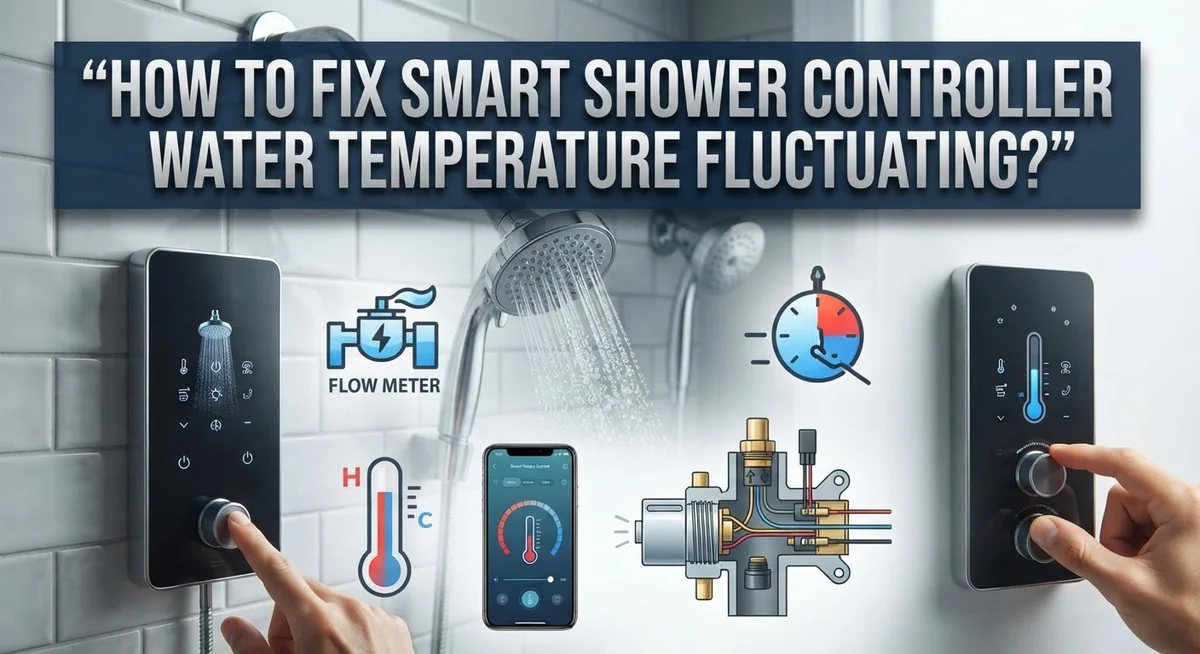
How To Fix Smart Shower Controller Water Temperature Fluctuating?
Nothing ruins a relaxing shower faster than a sudden blast of cold water. Or worse, an unexpected scalding surge that makes you jump back.
If your smart shower controller keeps changing temperature on its own, you are not alone. This is a common problem that many homeowners face.
The good news? Most causes are easy to spot and fix. Sometimes it is a simple sediment buildup. Other times, your water heater struggles to keep up with demand.
Flushing a toilet or running a sink can trigger these annoying spikes. Your pressure balancing valve might also be failing quietly behind the scenes.
In a Nutshell
- Check other water usage first. Toilet flushes or running taps often cause sudden hot or cold spikes in your shower.
- Inspect your water heater size. A tank that is too small cannot keep up with your showerhead’s output, leading to fluctuations.
- Reset your thermostat. Set it to a maximum of 120°F for safe and stable water temperature.
- Look for mineral buildup. Sediment inside the thermostatic cartridge can block smooth water flow and cause temperature swings.
- Restart your controller. Simply unplug and reconnect your smart shower controller to reset the system.
- Consider a thermostatic mixer valve. This device helps balance hot and cold water, keeping your shower steady even when other taps run.
Why Smart Shower Controllers Experience Temperature Fluctuations
Smart shower controllers experience temperature fluctuations due to several mechanical and water pressure issues. Understanding these causes helps you fix the problem quickly.
Pressure changes from other water usage trigger the most common temperature spikes. When someone flushes a toilet or turns on a sink elsewhere in your home, water pressure shifts suddenly. Your shower feels this change immediately as hot or cold water surges through the pipes. This happens because water flows to multiple outlets at once, competing for pressure balance.
An undersized water heater tank cannot supply enough hot water to match your showerhead’s output. If your tank is too small, it empties faster than it can reheat. Your shower then pulls in cold water to compensate, causing noticeable temperature drops. Check your heater capacity against your showerhead’s flow rate to identify this issue.
Failing pressure balancing valves lose their ability to maintain consistent water pressure. These valves regulate hot and cold water mixing. When they wear out, they cannot respond quickly to pressure changes. Temperature swings become more frequent and severe.
Sediment buildup inside the thermostatic cartridge blocks smooth water flow. Mineral deposits from hard water accumulate over time. This buildup prevents the cartridge from adjusting temperature smoothly. The result is jerky temperature changes instead of gradual adjustments.
Deteriorating cartridges simply wear out after years of use. The internal seals and springs lose effectiveness. Water leaks past worn seals, disrupting the temperature balance. Cartridges eventually need replacement to restore stable temperatures.
Incorrect hot and cold water connections cause persistent problems. If installers reversed the inlet connections, temperature controls work backwards. Your system cannot regulate water properly no matter what adjustments you make. Verify connections match your controller’s specifications.
Each of these issues produces different temperature patterns. Identifying which cause affects your shower narrows down your repair approach significantly.
Diagnosing the Root Cause of the Problem
Start your diagnosis by turning off the main water supply and closing the drain stopper. This prevents water loss while you inspect the system. Next, check your water heater capacity against your showerhead’s flow rate. A tank that’s too small simply cannot deliver enough hot water when demand is high.
Inspect the thermostatic cartridge inside your controller. Mineral deposits often accumulate here and restrict water flow. You can remove the cartridge carefully and soak it in a solution designed to dissolve mineral buildup. Rinse it thoroughly before reinstalling.
Check all water connections at your controller. The hot and cold water lines must connect to the correct ports. Reversed connections cause immediate temperature swings. Trace each line back to confirm proper placement.
Look at your pressure balancing valve. This small component maintains equal pressure on hot and cold water sides. If it fails, one side overpowers the other, creating spikes. Listen for unusual sounds or feel for uneven water pressure when you manually adjust the handle.
Examine the inlet filters on your controller. Sediment and debris clog these screens over time. Clean them by removing any visible particles. Blocked filters reduce water flow and cause temperature instability.
Test your thermostat setting. Many controllers default to higher temperatures than necessary. Lower it to around 120°F and observe if fluctuations decrease. This simple adjustment often solves the problem.
Finally, perform a complete system reset. Unplug your smart shower controller from its power source for 30 seconds. Reconnect it and allow the system to recalibrate. This clears temporary glitches that cause erratic temperature behavior.
Document what you find during each inspection step. This information helps you determine whether the issue is pressure related, sediment related, or mechanical. You will then know exactly which component needs attention or replacement.
Step-by-Step Guide to Fixing Water Temperature Fluctuations
When your smart shower controller keeps changing water temperature, the problem often starts with how water flows through your system. Sediment and mineral deposits build up inside the thermostatic cartridge over time. This buildup blocks the valve from responding quickly to temperature changes.
Start by turning off your main water supply. Close the drain stopper to catch any small parts. Remove the cartridge carefully and inspect it closely. You’ll see white or brown crusty buildup if sediment is the issue.
Soak the cartridge in a cleaning solution designed for mineral removal. Use warm water and let it sit for several hours. Gently scrub away deposits with a soft brush. Rinse thoroughly before reinstalling. This simple step fixes many temperature fluctuation problems.
Check your inlet filters next. These small screens catch debris before water enters your controller. A clogged filter reduces water flow and causes temperature swings. Remove and rinse the filters under clean running water. Replace them if they look damaged or heavily soiled.
Verify that your hot and cold water connections are correct. Hot water should connect to the red inlet and cold water to the blue inlet. Reversed connections cause immediate temperature problems. Look at your connection labels and trace each line carefully.
Test your thermostat setting after cleaning. Set it to a maximum of 120°F for safety and stability. Higher settings make temperature fluctuations more noticeable and increase energy waste.
Unplug your smart controller from the power outlet. Wait 30 seconds, then plug it back in. This reset clears any software glitches affecting temperature control. Run water through your shower and check if fluctuations have stopped.
If problems continue after these steps, your pressure balancing valve may be failing. This component maintains consistent water pressure during temperature adjustments. A worn valve cannot keep pressure stable when other fixtures use water elsewhere in your home.
Resetting and Recalibrating Your Smart Shower Controller
Resetting and recalibrating your smart shower controller brings the system back to factory settings. This process clears any software glitches that cause temperature swings. Start by locating the reset button on your controller unit.
Most smart shower controllers have a small reset button you press for 10 to 15 seconds. Hold it until you see lights flash or hear a beep sound. This action wipes the controller’s memory and restores default settings.
After the reset, your thermostat returns to its standard temperature setting. Check what temperature your controller now shows on the display. You want to verify this matches your preferred shower temperature.
Recalibration happens next. Turn on your shower and let water run for 30 seconds to reach steady flow. Feel the water temperature with your hand or use a thermometer to measure it.
Compare the actual water temperature to what your controller displays. If they don’t match, your sensor needs adjustment. Most controllers allow you to manually calibrate the temperature reading through a menu option.
Access your controller’s settings menu using the display screen or mobile app. Look for a calibration or offset option. This feature lets you correct the difference between displayed and actual temperature.
Make small adjustments in one or two degree increments. Test the shower after each change to see if accuracy improves. This gradual approach prevents overshooting the correct calibration.
Once calibration feels accurate, your controller should maintain consistent water temperature. The reset clears old data that caused confusion in the system. Recalibration teaches the controller to read your actual water temperature correctly.
If temperature still fluctuates after these steps, your thermostatic cartridge may have internal damage. Mineral deposits could also block the calibration sensor. These issues require cartridge inspection or replacement by someone experienced with plumbing systems.
Tips for Maintaining Stable Water Temperature
Water temperature fluctuations happen when your shower controller can’t keep up with pressure changes. The key to stable water is understanding what causes these swings in the first place.
Your water heater size matters more than you might think. If your heater is too small for your showerhead output, it struggles to maintain consistent heat. When someone flushes a toilet or turns on another tap, water pressure drops suddenly. Your controller then compensates by sending hotter water to maintain temperature, but it overshoots and creates uncomfortable spikes.
Mineral buildup is a silent culprit that clogs your system’s internal pathways. Hard water leaves deposits inside the thermostatic cartridge and inlet filters. These blockages restrict water flow and prevent proper temperature control. The solution involves regular cleaning of these components to keep water moving smoothly.
Your pressure balancing valve works like a traffic cop for water flow. When this valve weakens or fails, it can’t regulate pressure changes effectively. Water temperature then swings wildly instead of staying steady. Testing this valve helps you determine if replacement is necessary.
Sediment accumulation in your water heater tank also contributes to temperature problems. As sediment builds up, it reduces heating efficiency and creates hot spots. Your controller responds to these inconsistent temperatures by making constant adjustments.
Simple maintenance prevents most fluctuation issues. Check your inlet filters monthly for debris. Inspect your connections to ensure hot and cold water lines connect correctly to your controller. Keep your thermostat set to a reasonable temperature like 120 degrees Fahrenheit, which reduces strain on your system.
Monitor your water temperature patterns. Does it fluctuate at specific times, like morning showers or after laundry? This information helps you identify whether the problem stems from heater capacity or valve failure. Understanding these patterns guides your maintenance efforts and helps you fix the right component.
Common Mistakes That Worsen Temperature Issues
Many people make mistakes that actually make temperature swings worse. Understanding these errors helps you avoid them and solve the real problem faster.
Ignoring your water heater capacity is a big mistake. If your water heater is too small for your showerhead’s flow rate, pressure drops happen instantly when someone flushes a toilet or turns on another tap. You might think your controller is broken when the real issue is that your tank simply cannot supply enough hot water to match the demand.
Failing to reset your thermostat properly creates ongoing problems. Your controller has a maximum temperature setting, usually around 120°F for safety. If you never check this setting or assume it’s correct, your system struggles to reach stable temperatures. Many people skip this simple step entirely.
Improper cartridge installation leads to continuous fluctuations. When you reinstall your thermostatic cartridge after cleaning, the orientation matters. If it goes back in backwards or sits incorrectly, water pressure cannot balance properly. The cartridge controls how hot and cold water mix, so even a slightly wrong position ruins everything.
Connecting your hot and cold water lines backwards causes immediate problems. Your controller expects hot water on one side and cold water on the other. Reversed connections make temperature control impossible no matter what you adjust.
Neglecting to clean your inlet filters regularly allows sediment to accumulate. Clogged filters restrict water flow unevenly, causing sudden temperature spikes and drops. This simple maintenance task takes minutes but prevents major headaches.
Replacing your pressure valve without checking other components wastes money. If your valve is new but temperature still fluctuates, your issue might be mineral buildup in the cartridge or sediment in your water heater tank instead. Always diagnose completely before replacing expensive parts.
Troubleshooting Persistent or Recurring Fluctuations
When temperature fluctuations keep happening even after your first fix attempt, you need a systematic approach. Start by identifying the pattern of your temperature swings. Do they happen when someone flushes a toilet? Does the temperature spike when another tap opens? This tells you whether pressure changes are the real problem.
Next, examine your water heater’s capacity versus your showerhead’s flow rate. A small water heater cannot supply enough hot water when multiple fixtures run at once. Your heater may struggle to maintain temperature during peak usage times. Check your heater’s gallon capacity and compare it to your shower’s gallons per minute output.
Inspect your thermostatic cartridge for mineral deposits. Turn off your water supply and remove the cartridge from your controller. Look for white or tan buildup inside the cartridge passages. Soak the cartridge in a solution of equal parts white vinegar and water for several hours. Rinse it thoroughly before reinstalling.
Check that your hot and cold water inlet connections match your controller’s specifications. Reversed connections cause immediate temperature problems that persist. Verify the correct line is connected to each port on your controller.
If issues continue after these steps, your pressure balancing valve may be failing. This valve regulates water pressure from both hot and cold lines. When it deteriorates, pressure imbalances cause sudden temperature changes. You may need professional inspection or replacement of this component.
Clean your inlet filters regularly to prevent sediment accumulation. Clogged filters restrict water flow and create pressure inconsistencies. Remove debris from the fine mesh screens inside your controller’s water entry points. This simple maintenance prevents many recurring problems.
Document when fluctuations occur most frequently. This information helps you pinpoint whether the issue stems from water heater capacity, mineral buildup, valve failure, or pressure problems. Systematic troubleshooting saves time and prevents unnecessary component replacements.
Final Thoughts
Fixing water temperature fluctuations does not need to feel overwhelming. Most problems come from a few common sources. Your water heater size, pressure valve, and cartridge condition matter most.
Start with the basics first. Check your water heater capacity against your showerhead flow rate. This simple comparison often reveals the root problem right away.
Reset your thermostat to a safe maximum temperature. This small step fixes many fluctuation issues instantly. It takes just a few minutes to complete.
Mineral deposits and sediment build up over time. Regular cleaning of your cartridge and filters prevents most future problems. Make this part of your monthly routine.
If basic fixes don’t work, your pressure balancing valve likely needs attention. This component controls water flow when other fixtures activate. A failing valve causes those sudden hot or cold spikes you experience.
Thermostatic shower mixers offer another solution. They actively stabilize temperature regardless of other water usage in your home. This technology prevents the sudden shifts that catch you off guard.
Remember to verify your hot and cold connections too. Backwards connections create immediate and confusing temperature problems. This mistake is easy to fix once you spot it.
Patience helps during troubleshooting. Work through each potential cause systematically. Rushing the process often means missing the actual problem.
Most smart shower controller issues have straightforward solutions. You don’t need advanced plumbing skills to fix them. Basic maintenance and careful inspection solve the majority of cases.
If your problem persists after trying these steps, consider calling a professional plumber. Some issues, like deep sediment in your water heater tank, need expert tools. Don’t hesitate to get help when needed.
Your shower should provide consistent, comfortable water temperature every time. With the right approach, you can achieve this reliably. Take action today to enjoy a better shower experience tomorrow.
Frequently Asked Questions
Why does my shower temperature spike when someone flushes the toilet?
When another tap or toilet activates, water pressure changes in your plumbing system. This sudden shift forces more cold water or hot water through your shower controller at once. Your system struggles to balance the incoming water streams quickly enough. The result is a noticeable temperature spike that catches you off guard.
Your pressure balancing valve should handle these changes. If it’s worn out, it can’t respond fast enough. Mineral deposits and sediment can also clog the valve and slow its reaction time.
Can a small water heater cause temperature fluctuations?
Yes, absolutely. If your water heater is too small for your showerhead’s flow rate, it can’t supply enough hot water consistently. When you’re using hot water and someone else turns on a tap, your heater gets overwhelmed.
The tank temperature drops quickly because it can’t keep up with demand. Your shower controller then receives cooler water than expected. Check your heater’s capacity and compare it to your showerhead’s gallons per minute output.
What should I do if my thermostatic cartridge has mineral buildup?
Turn off your water supply first. Shut the drain stopper to catch small parts. Remove the cartridge carefully from your controller.
Soak the cartridge in a solution designed to dissolve mineral deposits. Let it sit for several hours. Rinse thoroughly under clean water. Reinstall it exactly as it was positioned before. Turn the water back on and test your temperature stability.
Does resetting my controller actually help?
Yes, it can. Unplug your smart shower controller for 30 seconds, then reconnect it. This clears temporary glitches in the system’s memory.
Also reset your thermostat setting to a safe maximum of 120°F. This simple step often resolves minor temperature swings that started recently.

Hi, I’m Rue Hessel, the founder and voice behind TheGenTool. I’m a passionate tech enthusiast who loves exploring the latest gadgets, smart devices, and electronics that shape our everyday lives. Through my website, I share honest, hands-on reviews of trending Amazon products to help you make smarter and more confident buying decisions.